
Have you ever noticed that simple chart patterns might hide clues for smarter trades? In forex, technical analysis means looking at past price moves to help predict what could happen next. It’s kind of like tuning into a secret market chat where every candlestick (a small chart tool that shows price movement) tells its own story. With these clear signals, you can step into the market with more confidence and adjust your trading choices along the way. In this guide, we’ll show you how basic patterns and trends can give your trading strategy a real boost.
Mastering Technical Analysis in Forex: A Comprehensive Overview

Technical analysis in forex is all about looking at past price moves to guess what might happen next. It focuses on price action since the price itself carries all the market’s secrets. For instance, if you spot a hammer pattern on a candlestick chart during a pullback, that clear signal might inspire you to adjust your trading choices.
Different charts each have their own perks. A line chart gives you a clean view of trends over time. Bar charts go a step further by showing open, high, low, and close prices. And candlestick charts win the crowd with visual patterns that hint at future movements. Traders love them because they turn complex data into signals that feel easy to understand.
Many trading platforms now mix live spreads, demo accounts, and courses like Technical Analysis 101 to help you sharpen your skills. This blend means both beginners and seasoned traders get real-time data while learning how to read charts effectively. It lets you keep an eye on daily trends and even step back to see the market’s weekly rhythm.
By focusing on historical price details and familiar chart patterns, technical analysis gives you a practical way to understand the forex market. It helps you shape a trading strategy that feels both smart and secure.
Essential Technical Indicators in Forex Markets

Technical indicators let you follow the gentle beat of the market. They take everyday factors like price, volume, and timing and turn them into numbers that hint at future moves. When the relative strength indicator spikes, it’s a clue that prices might settle after a strong push. Think of it as a little meter that tells you when the market might take a breather. Each tool has its own settings and job, helping traders decide when to jump in or step back.
Every indicator uses a special formula to capture market energy and trend strength. Some smooth out daily ups and downs using averages, while others react quickly to sharp price shifts to give early hints. When you check out oscillators alongside moving averages, you can tell if a currency pair is overbought or oversold. And with volume signals in the mix, it cuts through everyday noise to focus on the big moves.
| Indicator | Description |
|---|---|
| Relative Strength Index (RSI) | This tool shows if prices are too high or low, readings over 70 signal overbought and below 30 indicate oversold conditions. |
| Moving Average Convergence Divergence (MACD) | MACD uses two moving averages (12-period and 26-period) along with a 9-period signal to spot changes in market momentum. |
| Bollinger Bands | Based on a 20-day simple moving average and ±2 standard deviations, these bands help visualize market volatility and price ranges. |
| Average Directional Index (ADX) | ADX measures how strong a trend is without showing its direction, confirming when a move is solid. |
| Stochastic Oscillator | This indicator flags fast market swings with levels above 80 as overbought and below 20 as oversold. |
Mixing these tools gives you a sharper view of market dynamics. When traders adjust settings and watch how these indicators work together, they can better choose when to enter or exit a position. It’s a practical, data-driven approach that keeps pace with the steady pulse of forex markets.
In short, using a blend of technical indicators moves you closer to a mindful trading strategy. It’s like having a trusted friend who points out the subtle signals hidden in everyday market activity. And honestly, isn’t that the kind of insight every trader deserves?
Recognizing Chart Patterns in Forex Technical Analysis

Chart patterns act like a simple map for traders, showing hints of where currency prices might head next. They are split into two kinds: continuation patterns and reversal patterns. In plain terms, these patterns help traders guess if a trend will carry on or take a turn. For example, drawing a clean line through a series of higher lows might suggest an ongoing uptrend.
Continuation patterns, like ascending triangles, descending triangles, flags, and pennants, are like short pauses in a trend. They suggest that the current movement might take a break before picking up speed again. Think of it as a brief rest stop on a long journey.
On the other hand, reversal patterns signal a possible switch in direction. Patterns like head and shoulders, double tops or bottoms, and rising or falling wedges point to a change in market mood. For example, the head and shoulders pattern might show a shift from a rising market to a falling one, which makes traders take a step back and be cautious.
Traders also mix in Fibonacci retracement levels, these are percentages (38.2%, 50%, 61.8%) that help identify key areas where prices might bounce or pause. When you notice a reversal pattern close to the 61.8% retracement level, it could be the clear sign you need to rethink your trade.
Applying Trend Lines, Support, and Resistance in Forex Technical Analysis

Trend lines, support, and resistance zones help guide traders through the ups and downs of price movement. They show where prices tend to slow down or change direction, giving you a handy visual tool for spotting breakouts and managing risk.
Drawing and Interpreting Trend Lines
Start by using two or more swing points, those spots where the price turns, to draw a trend line that shows the overall direction. For instance, joining higher lows in an uptrend highlights steady upward momentum. A good trend line isn’t fixed; it moves with the market as new swing points show up.
Check how steep the line is and watch for pullbacks (temporary reversals in price). If the price bounces off the trend line during a pullback, it signals that the trend is strong. This clear signal can boost your confidence when deciding to enter a new trade.
Identifying Support and Resistance Levels
Look for horizontal levels where the price has stalled multiple times. These are like checkpoints that show strong market interest. Often, previous high or low swing points become these barriers and tell you where the price might reverse.
Seeing the price hit these zones again can remove some of the guesswork. These levels act as decision points, so finding them early can fine-tune your trading strategy and alert you to possible breakouts.
Using Channels and Pivot Points
Draw parallel lines to create channels that wrap around the trend, giving you a clearer picture of the price range. Pivot points, calculated markers that show potential change areas on a daily or weekly basis, offer extra clues about when reversals may happen. When you combine these tools, they work together to guide your choices for entry and exit, helping you trade with more precision.
Deploying Moving Averages & Oscillators in Forex Technical Analysis

Moving averages offer a calm snapshot of how prices move over time. Simple moving averages, such as a 20-period SMA, help even out sudden ups and downs so you can focus on the bigger picture. Meanwhile, exponential moving averages (which give extra weight to the latest prices) shift more quickly. A good example is how a 10-period EMA might warn you of a trend change much earlier than a 50-period EMA.
When you line up a short-term EMA with a long-term one, you might see them cross over. If the shorter EMA climbs above the longer one, it's like a green light nudging you to consider buying because a rising trend could be starting. On the flip side, if the shorter EMA dips below the longer one, it suggests the market might be heading downward. This simple rule helps you decide when to jump into a trade.
Oscillators give you another tool to understand market moves. Tools like the Relative Strength Index (a gauge that shows if the market is too heated or too cold) and the Stochastic Oscillator (which measures speed and momentum) use levels like 80 and 20 to hint at overbought or oversold conditions. For instance, if the Stochastic Oscillator starts moving up from a low zone, it’s like a friendly nudge saying that buying energy might be building up.
Mixing moving average crossovers with oscillator signals can help filter out false alarms. When you spot a bullish EMA crossover at the same time an oscillator is rising out of an oversold area, it often signals that a real shift is happening. Using both methods together gives you a clearer view of the market and can boost your trading confidence.
Managing Risk with Technical Analysis in Forex Trading

Forex traders usually risk only 1 or 2 percent of their account on each trade. They treat every trade like a careful bet instead of a wild guess. It’s a lot like planning a meal, you decide how much to spend on each ingredient so you don’t blow your whole budget.
Setting up protective orders is just as important. Traders often put stop-loss orders just beyond key support or resistance points to limit losses. They also set take-profit targets near clear chart patterns or Fibonacci zones (Fibonacci zones are areas based on a simple number sequence that helps spot good exit points). And when the market is moving steadily, adding a trailing stop can help lock in profits.
Sometimes big news, like a change in Fed rates, can stir up the market and widen spreads, affecting where you should place your stop-loss. In those moments, checking resources like "Fed Rate Decision Market Reaction" can give you a clearer picture.
By keeping your trade sizes small and sticking with your protective orders, you can help guard your money even when sudden market shifts occur. This smart approach not only limits losses but also builds a steady, confident strategy when surprises hit the market.
Multi-Timeframe Technical Analysis in Forex Trading

When you trade forex (buying and selling currencies), using more than one chart timeframe can give you a clearer view of the market. You start by looking at a weekly chart to catch the big trend, move to a daily chart to see key support or resistance points, and finish with an intraday chart, like a 1-hour view, to decide the perfect moment to jump in or out. This process is like listening to a steady heartbeat while also catching the quick beats that tell you more about what’s happening right now.
Begin with the weekly chart so you know the long-term direction. It offers a bird’s-eye view of where the market has been headed. Next, switch to the daily chart to find important price areas where the market might react, almost like finding the corners and edges in a puzzle. And then, use an intraday chart to zoom in on the small price moves that signal your exact entry or exit points.
This layered method helps you time your trades more precisely and avoid those annoying false signals. For instance, if the weekly chart shows a clear upward trend and the daily chart supports this with a solid setup, spotting a brief pullback on the intraday chart can be your green light to trade. In short, aligning all these timeframes builds your confidence and keeps your trading in tune with the overall market flow.
Technical Analysis Tools and Platforms for Forex Traders

MetaTrader 4 and 5 are among the most popular platforms for forex traders. They come packed with handy indicators, tools that let you write your own scripts, and one-click order entry so you can jump in on market moves fast. Meanwhile, TradingView offers in-depth charting that you can tweak with Pine Script (a language for customizing charts) and even share your ideas with others. And then there's cTrader, known for giving you detailed level II pricing and detachable chart panels that you can move around to suit your style. Each one also includes drawing tools like trend lines, Fibonacci retracements (a way to spot potential support and resistance levels), and live news feeds that help guide your trading decisions.
You can easily tailor these platforms to match your personal trading style. For instance, MetaTrader lets you change chart colors, set up custom indicator settings, and even craft your own tools using scripts. TradingView’s layout is very flexible so you can design and save your ideal chart setups. And cTrader offers configurable panels and visual aids that work great whether you’re a beginner or a seasoned trader, making it easier to read the market.
Another neat benefit is the option to use demo accounts before risking real money. Most platforms let you practice technical analysis in a simulated environment, so you can get a feel for how things work. When you’re ready, you can switch over to live data feeds that provide real-time updates. This smooth transition helps you understand market conditions better and builds your confidence so you can develop a strong trading edge.
Case Study: Step-by-Step Technical Analysis on a EUR/USD Trade
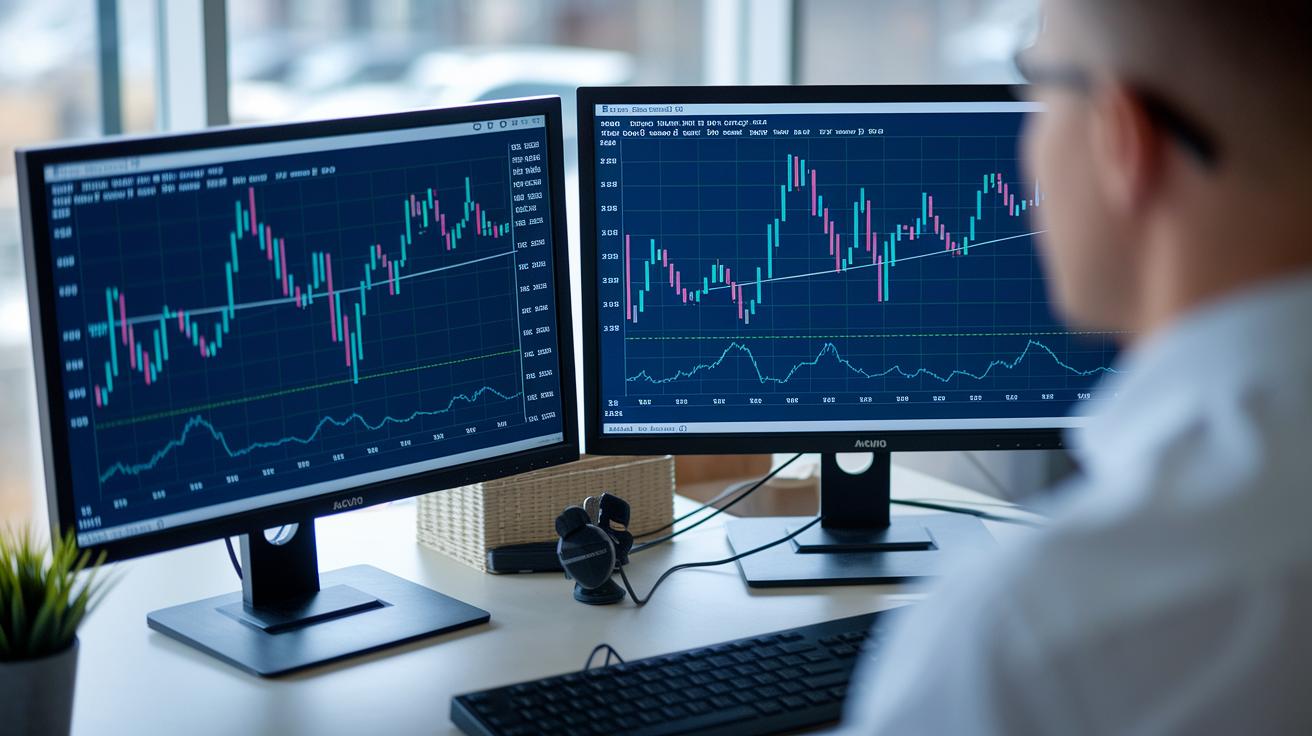
Let's walk through a real EUR/USD trade using technical analysis. We start with a daily chart and a few friendly tools to build a smart, clear plan.
First, draw an upward line connecting two clear lows from February. Picture this as a gentle slope that shows where buyers stepped in. We use a support point at 1.1000 to set the stage for a precise trade plan with sound risk control.
- Begin by drawing your uptrend line on the daily chart. Imagine linking two clear dips that highlight consistent buying pressure.
- Then, on a 4-hour chart, check for a crossover of a 20-period simple moving average (SMA). In simple terms, SMA is the average price over 20 periods, and when it crosses over, it acts like a green light indicating a shift in market momentum.
- Next, verify the move by making sure the Relative Strength Index (RSI) is rising from below 30. RSI is a tool that measures if the market is too low or high, so watching it climb helps confirm a market rebound.
- Now, place your long order while risking just 1% of your trading account, and set a stop-loss at 1.0980 to guard against sudden reversals.
- Set your take-profit level at 1.1120. This price aligns with a 61.8% Fibonacci retracement level, a handy tool that gives you a clear exit target.
- Lastly, backtest your strategy over the past six months. This means you review how the plan would have worked before using it for real trades, and adjust the strategy if needed.
These steps show how blending clear price action analysis with smart risk management can help improve your trade entries and exits, giving you a practical edge in the forex market.
Final Words
in the action, this article charted a clear course through key subjects like reading charts, drawing trend lines, managing risk, and using live case studies to bring theory to life. We explored practical methods that simplify technical analysis in forex, offering tools to spot trends and make secure moves. Each section provides insights that help shape a balanced digital asset portfolio. Keep these strategies close and remain alert to market signals. The market is waiting, step forward with confidence and a focused mindset.
FAQ
Q: How can I access technical analysis in forex PDFs or books?
A: Technical analysis in forex PDFs or books offer detailed guides on chart patterns, indicators, and risk management. They serve as handy resources for beginners and seasoned traders looking to refine their skills in forecasting price moves.
Q: What is technical analysis in forex?
A: Technical analysis in forex means studying past price movements and patterns to predict future currency trends. It focuses solely on price data rather than broader economic factors, helping traders spot potential opportunities.
Q: What is the 90% rule in forex?
A: The 90% rule in forex states that around 90% of traders may lose money if they do not apply disciplined technical analysis and risk management. It underlines the importance of strategy and careful planning for success.
Q: What are the three types of analysis in forex?
A: The three types of analysis in forex include technical analysis, which uses charts and trends; fundamental analysis, which looks at economic news; and sentiment analysis, which gauges market mood to guide trading decisions.
Q: What is the 5 3 1 rule in forex?
A: The 5 3 1 rule in forex is a guideline that suggests managing risk by balancing profit targets and loss limits. It typically helps traders set precise entry and exit points, though its exact use can vary with different strategies.
