Ever notice how your car slowing down suddenly can be a sign of trouble?
In the same way, when key numbers in our economy dip steeply, it might be hinting that a recession is on the way.
In this post, we’ll break down how economists check cycle metrics (simple ways to measure the natural ups and downs of our economy) to spot early signs of a slowdown.
We’ll look at measures like GDP (the total value of all goods and services produced by a country) to see how shifts affect everyday costs and business decisions.
So, let’s dive in and discover how clear, straightforward numbers help explain why recessions happen and what they could mean for all of us.
Recession Definition Economics: Clear Cycle Metrics
A recession happens when economic activity takes a big dive. It is a normal part of how the economy works. Experts usually check a number called gross domestic product (GDP). This number tells us the total money value of all goods and services produced. If GDP falls or even goes negative, it means the economy is slowing down. For example, recent data shows that in Q2 2022, the U.S. economy shrank by 0.9%, and in Q1 2022, it dropped by 1.6%.
Think of GDP like your car’s speedometer. When everything is running smoothly, the reading stays steady. But if you see that number drop suddenly, it is a warning sign, just like noticing your speed fall unexpectedly. This sharp change in GDP works the same way; it signals that a recession might be on its way.
This slowdown not only shakes people’s confidence in the market but also changes how everyday expenses and business choices are made. Investors and policymakers keep a close eye on these figures so they can plan ahead, soften the impact of tough times, and prepare for a turnaround. Understanding how GDP works makes it easier for both seasoned professionals and regular folks to grasp why a recession happens and what it might mean for all of us.
Technical Indicators for Identifying Economic Recessions
In one quarter, a factory's output may drop causing ripple effects seen across the entire economy. Analysts watch key numbers to know when the economy might be slowing down. For instance, if a country’s gross domestic product (GDP, a measure of all the goods and services produced) falls for two straight quarters, it's like noticing your car’s speedometer suddenly dropping, something's clearly off.
Another revealing sign is a rise in unemployment. When more people lose their jobs, consumer spending tends to drop. Think of it like a neighborhood where fewer lights turn on at dusk, hinting at lower energy and activity.
Retail sales give us a daily view of spending habits. Imagine a local shop where a sudden decrease in visitors immediately tells the owner that people might be tightening their budgets. Factories’ output, known as industrial production, also shows us how busy or slow the overall market is. And when individuals feel that their earnings aren’t going as far as before, they usually cut back on their spending.
During these tough times, borrowing costs usually climb, putting extra pressure on household budgets, kind of like having to pay more for gas on a long road trip. So, when prices rise and job losses mount, it hints at a series of challenges that together signal a downturn. By looking at all these factors hand-in-hand, experts can see that it’s more than just a brief, temporary slowdown.
Causes and Characteristics of Economic Slumps
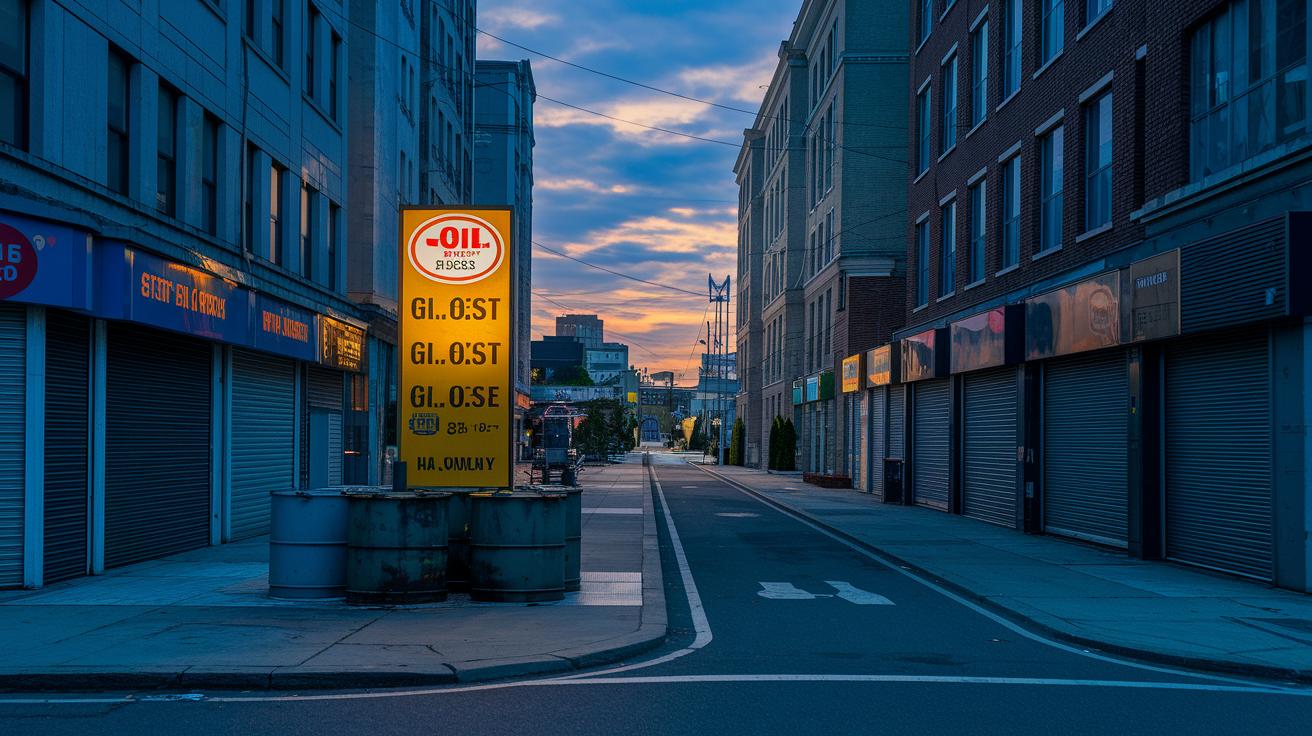
A slump can begin with an unexpected shock from outside the system. For example, a supply shock, like what happened in 1973 when the oil supply suddenly fell, sent prices soaring and slowed growth. Imagine discovering that the scarce oil meant paying much more at the pump, even though incomes stayed the same. That moment brought about the classic mix of high inflation and sluggish production.
Another major trigger occurs when a crisis forces people to change how they live and work. In 2020, the COVID-19 pandemic forced many businesses to shut down and led to widespread job losses. It’s like watching a busy street empty out overnight, with the echoes of activity fading away. Such abrupt changes can cause production to drop sharply.
Demand shocks also play an important role. When consumers lose confidence, worrying about their finances, for instance, they spend less on goods and services, and even basic needs become harder to finance due to tighter credit. Think of a favorite local shop where regular customers suddenly cut back on their visits because uncertainty makes them reconsider every purchase.
Sometimes, policy missteps add fuel to the fire. When governments or institutions delay their response to these shocks, the negative impacts multiply. Rising prices, falling output, and increasing unemployment together paint the typical picture of an economic slump.
Historical Recession Episodes and Economic Concept Comparisons

| Episode | Dates | Trigger/Cause | Duration | GDP Impact |
|---|---|---|---|---|
| Canadian Recession | Nov 1973 – Mar 1975 | An oil shock that pushed up prices, sparking inflation and causing job losses | Around 16 months | A clear drop in economic activity |
| The Great Depression | Oct 1929 – mid-1930s | A stock market crash combined with failing banks led to widespread panic | Several years | A deep, long-lasting decrease in GDP |
| Great Recession | 2007 – 2009 | A breakdown in financial markets coupled with a credit freeze | About 18 months | A worldwide drop in GDP with big market shocks |
| COVID-19 Recession | Mar 2020 – May 2020 | Lockdowns and reduced spending triggered by the pandemic | Only a few months | A quick, sharp dip in GDP |
Recessions usually mean a short-term slowdown in the economy. It’s a bit like noticing your car slow down for a moment on your daily drive. But when we talk about a depression, we mean a much longer and steeper slump, one where the economy takes years to recover, like tripping and staying down for a while.
Then there’s stagflation, which is a mix of stagnant growth and rising prices. Think of it as your wallet losing value while you’re still paying for the same things every day. Whether it's a quick recession, the severe downturn of the Great Depression, or the tricky period of stagflation, each case shows us different lessons about how our economy works.
Looking at these examples, you can see that even though economic slowdowns often share signs like lower output and higher unemployment, their causes, how long they last, and how hard they hit our everyday lives can be very different. This understanding helps both investors and policymakers make smarter choices.
Policy Responses and Recovery After Economic Recessions
When the economy slows down, governments often step up with help like extra spending funds and tax cuts for families and businesses. Imagine your neighborhood getting a small tax break. It feels like someone has given the area a burst of energy, which helps local stores thrive again.
These government actions keep money circulating. This means families and businesses can still pay bills and even try new ventures, even when jobs are few and loans cost more. It’s a bit like having a safety net when things feel shaky.
Central banks also play a big part. They lower interest rates and start something called quantitative easing (this is just a fancy way of saying they add extra money into the system to make borrowing easier). Think of it like putting oil in a creaky engine so everything runs smoother.
In these times, clever investors might spot well-performing assets sold at lower prices. It’s a small spark that can kick start a steady market recovery.
- Governments use extra spending and tax cuts to boost the economy
- Central banks lower interest rates and add funds through quantitative easing
These recovery tools help slow down the economic slump until confidence builds again and spending picks up once more.
Final Words
In the action, we broke down the basics of recession definition economics by explaining how GDP, unemployment, and consumer behavior signal an economic slowdown. We looked at past downturns, their causes, and the mix of factors that turn economic dips into full recessions. We also touched on how policy responses can set the stage for recovery and help smooth the bump for investors. Every bit of this insight aims to equip you with the clarity needed to build strong, diversified digital asset portfolios. Stay positive and keep learning.
FAQ
Recession vs depression
The recession vs depression debate shows that a recession is a short-term economic downturn with falling GDP and rising unemployment, while a depression is an extended period of severe economic decline.
Recession definition economics example
The recession definition in an economics example explains a period when economic activity drops, like when GDP falls for two consecutive quarters, causing lower income and job losses.
Recession definition economics simple
The recession definition in simple terms means a time when overall economic performance declines noticeably, marked by falling GDP, reduced spending, and increased layoffs.
Recession definition economics 2022
The recession definition in economics for 2022 refers to observed GDP declines, lower consumer spending, and other economic indicators signaling a slowdown in overall economic activity.
What causes a recession
The causes of a recession involve factors like reduced consumer spending, tightened credit, lower business investments, and external shocks that negatively affect the economy.
What are 5 causes of a recession
The five causes of a recession often include declining consumer confidence, reduced business investment, tightening credit conditions, external supply shocks, and abrupt changes in fiscal policy.
Recession vs inflation
The recession vs inflation comparison clarifies that a recession is an economic slowdown, while inflation means rising prices; both can occur simultaneously, affecting purchasing power differently.
Are we in a recession
The question of whether we are in a recession depends on current economic data like sustained negative GDP growth and rising unemployment, which economists use to signal a downturn.
What will happen in a recession?
What happens in a recession is a slowdown in economic activity where businesses cut back, unemployment may rise, and consumers spend less, leading to overall financial strain.
Who benefits from a recession?
Who benefits from a recession can vary; strategic investors might find discounted assets to buy, though most people experience lower income and tighter budgets during this time.
Do things get cheaper in a recession?
Often, reduced demand leads to lower prices and promotions, though the extent varies depending on the market and product availability.
When was the last US recession?
The most recent downturn occurred in early 2020, marked by rapid economic contraction during the COVID-19 lockdowns.
