
Have you ever noticed that investments which usually move together sometimes drift apart? When one stays strong while the other loses steam, it hints at a secret change in market energy (that is, the overall mood and feelings driving the market). This type of market sentiment divergence analysis, a way to spot early signals about how investors feel, can help traders pick up on these subtle clues and turn them into gains.
It's a bit like watching a tug of war where one side starts to take the lead. This fresh look at market mood can guide your smart moves when the usual playbook just doesn’t work anymore. It challenges what you expect and opens new doors for investors looking to stay ahead.
2. market sentiment divergence analysis Sparks Gains

SMT divergence happens when two assets that usually move in sync show opposite signals during the same period. For example, one asset might record a higher low, while another shows a lower low. This difference hints that underlying market forces are pulling in different directions, one might be stronger while the other loses its footing. To learn more about this idea, check out "How to Interpret Market Sentiment" on nftcellar.net.
By comparing price action with other measures like oscillators (tools that smooth out price changes), volume (the total amount traded), sentiment indicators (gauges of market mood), or even another asset’s movement, traders get early hints that the market might be about to shift.
It’s important to understand why divergence matters. Bullish divergence often hints at a market that could start moving upward, while bearish divergence warns that momentum is fading. Tools like "Market Sentiment Indicators" provide insight into today’s market mood by tracking these technical signals. Whether studying price trends or comparing different behaviors, traders lean on these clues to weigh risks and spot opportunities in both traditional investments and digital tokens.
- oscillator divergence
- volume divergence
- sentiment divergence
- intermarket divergence
Grasping these basic ideas gives traders a clearer view of the market’s pulse. By spotting and classifying divergences, investors can make better choices, anticipate changes, and decide when to enter or exit a position. Paying attention to whether correlations are moving in the same way or in opposite directions helps refine these insights even further. This careful approach, paired with other technical checks, turns subtle market differences into real chances for gains.
Technical Indicators for Market Sentiment Divergence Analysis
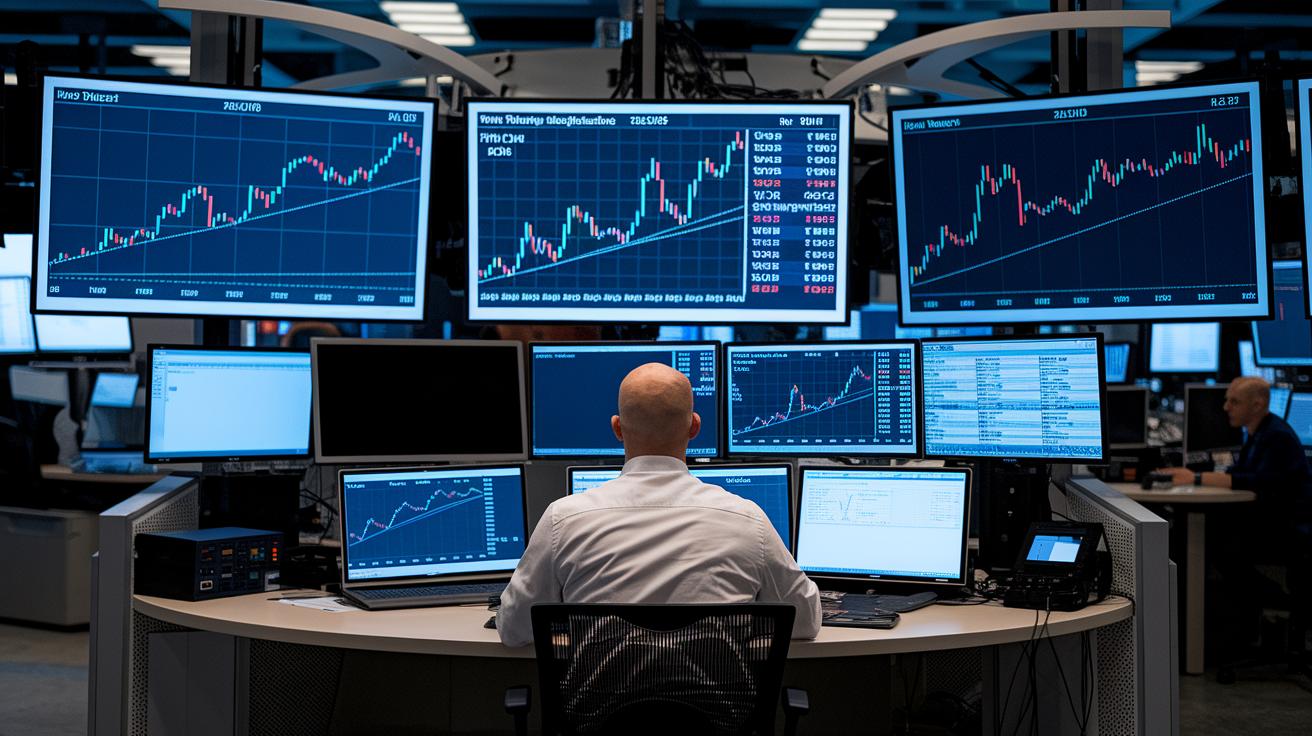
Picking the right technical tools is key when you want to notice hints of changing market energy. Technical indicators help show when the price and market mood are not lining up. For example, the RSI (Relative Strength Index, which shows if a market might be overbought or oversold), MACD (Moving Average Convergence Divergence, a tool that reveals trend shifts), ROC (Rate of Change, which tells you how fast prices change), OBV (On-Balance Volume, linking volume with price moves), VWAP (Volume-Weighted Average Price, providing an average price based on volume), and VIX (Volatility Index, a measure of market stress) all give clues about divergence. When these signals don’t match up with the price action, traders see it as a hint that things could change soon.
| Indicator | Divergence Signal | Strength & Limitations |
|---|---|---|
| RSI | If prices make higher highs in an uptrend but the RSI doesn’t follow, it hints at a fading momentum | Offers clear clues about market strength but can give false signals in a flat, sideways market |
| MACD | A drifting or crossing MACD histogram and signal line hints that a trend might reverse | Helps you spot trend changes, though sometimes it lags behind price moves |
| ROC | When price lows fall but ROC lows are higher, it suggests a reversal might be near | Reacts quickly to changes but can seem jumpy when the market is shaky |
| OBV | If volume trends do not match up with price moves, divergence is present | Shows the role of volume in changes, although it might be less clear in markets like forex where real volume is hard to pin down |
| VWAP | Divergence occurs when price drifts far from VWAP levels | Good for intraday checks, though shifts in liquidity can affect its reading |
| VIX | Sudden spikes in VIX that don’t match the movement in prices can signal divergence in volatility | Acts as a measure of market tension but may react sharply to outside events |
Mixing these tools together makes the signals you get more reliable. When one indicator hints at a change, pairing it with a second sign – like matching a bearish RSI cue with a drifting MACD – can really boost your confidence. This combined approach helps cut down on the risk of following just one clue and smooths out the noise that sometimes shows up in volatile markets. In short, using several technical perspectives makes it much easier to understand what the market is really doing, so you can decide when to jump in or step back with confidence.
Quantitative Methods in Market Sentiment Divergence Analysis

Traders often start by testing divergence setups on past price data. This approach helps you see how your signals worked during different market moods and lets you refine your entry and exit points. You can also use demo accounts to try out these ideas without any financial risk, giving you a clearer sense of how data-driven hints translate into real trades.
Next, it’s key to pick the right performance measures. For example, correlation coefficients show how closely two assets move together, while Sharpe ratios compare what you earn to the risks taken. These numbers offer a simple snapshot of how well your strategy works and help you spot moments when divergence signals produced profits. Using this clear, step-by-step method means you can adjust your rules based on proven results rather than just a gut feeling.
Then, modern trading platforms boost your ability to dig into the numbers. Many today provide deep liquidity, tight spreads, and fast order execution, features often powered by systems like ECN or cTrader. Plus, tools with real-time charts, like TradingView, help you easily keep an eye on these data signals. With such reliable tools, you can keep honing your divergence strategies in a market that values both precision and speed.
Historical Case Studies in Market Sentiment Divergence Analysis

Imagine watching the EUR/USD pair push past a big barrier while the GBP/USD pair struggles to make its own high. In this setting, you see one pair showing a strong upward move while the other falls behind. This tells us that the GBP/USD might be weaker right now, maybe even hinting at a chance to short it. It’s like getting a friendly nudge to pay extra attention before deciding to buy or sell.
Think about two top cryptocurrencies: Bitcoin and Ethereum. Bitcoin forms a higher low, which is a sign it is holding its ground, whereas Ethereum drops to a lower low, suggesting its momentum is fading. This kind of split tells traders that Bitcoin could keep climbing, while Ethereum might find it hard to catch up. When you notice these differences, it helps in adjusting your strategy in the fast-moving digital market.
Now, consider the stock indexes. The S&P 500 is hitting higher highs, yet the Dow Jones and Nasdaq 100 aren’t keeping the pace. This uneven movement sends a clear message: not all parts of the market are growing at the same rate. Studies even note a rough +0.7 link between the EUR/USD and gold prices (with gold meaning XAU/USD, which is a standard way to talk about gold traded as cash). In short, comparing how similar instruments move can unveil hidden trading opportunities and guide more careful decisions.
Platforms and Tools for Market Sentiment Divergence Analysis

Charting and trading platforms are key when you’re digging into market shifts. Many traders pick TradingView because it sends real-time alerts, offers custom scripts, and shows charts that capture market moods over minutes or hours. Some prefer MT4 because its built-in oscillators make technical checks simple, while others opt for ECN or cTrader for their fast order execution and deep liquidity. These tools help cut down on timing delays and give you clear snapshots of the market when assets start moving in different ways.
Automated portfolio trackers take this analysis even further. They scan a wide range of assets and technical indicators right as the action happens. With features like customizable alerts, backtesting tools, and API access for running automated strategies, these trackers are a solid choice for today’s traders. When picking a platform, look for one that also provides clear, adjustable risk management tools. For more on this, check out the article on "Benefits of Automated Portfolio Tracking Tools".
Risk Management in Market Sentiment Divergence Analysis

When the market feels a bit noisy, traders should double-check divergence signals using tools like moving averages or the RSI (a tool that measures speed and change of price) to clear up any false hints. This extra step comes in handy during low-volume spells, periods of sideways movement, or sudden unexpected jumps that can mislead you about the true market trend.
Putting risk management into play means you set clear rules for how big your trades should be and where to place your stop-loss based on recent support and resistance levels. By sizing your trade based on your risk tolerance, you help shield yourself from wild swings. And by keeping an eye on when the usual bond between assets starts to break down, you can catch early clues of shifting market currents. This approach not only lowers the risk of big losses but also gives you a steady way to tweak your strategy as the market changes.
Final Words
In the action, the blog explored market sentiment divergence analysis by breaking down key fundamentals, technical indicators, quantitative methods, historical case studies, and essential tool platforms. It showed how these insights help guide risk management and shape smarter portfolio decisions. Small, clear steps were shared to turn complex market shifts into practical trading ideas. Each section built on the last to give a clear view of how divergence signals move markets and open up stronger investment strategies. Positive momentum awaits those ready to act on these insights.
