
Ever thought a tiny price change might lead to big rewards? Bitcoin and Ethereum are bouncing back, showing that the crypto world is alive and kicking. Even small moves hint at a broader trend, lifting investors' spirits.
Today, we'll walk through some key numbers and explain how quick shifts in digital deals can set the stage for smart choices. Stay with us as we uncover how this vibrant market rhythm can guide your approach to digital investing.
Crypto Market Trend Overview & Key Data Points
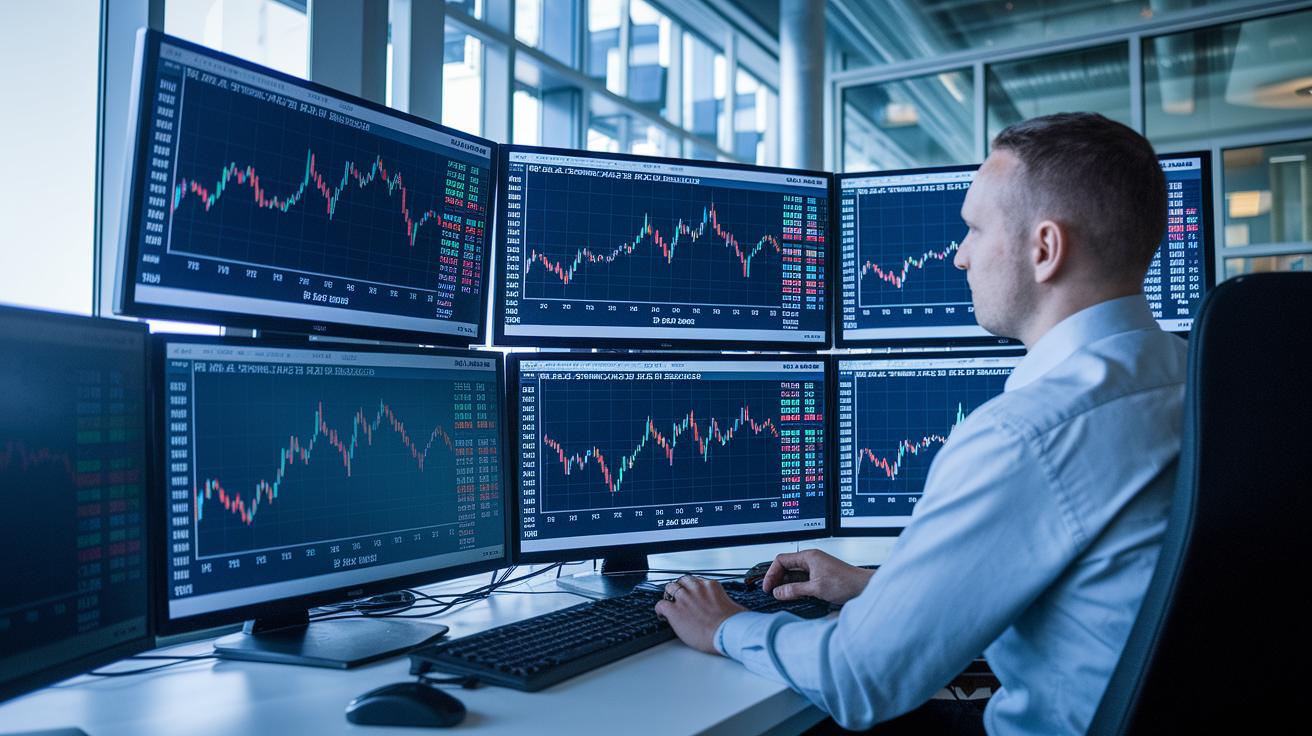
Right now, the global crypto market is valued at about $2.3 trillion. Bitcoin is sitting around $30,500 after bouncing up from a strong support level of $30,000 (support means a price level where buyers step in, while resistance is where sellers often take action).
Ethereum is at roughly $2,100, driving the daily trading volume to an impressive $120 billion. In this fast-moving market, getting real-time updates is key to spotting swift shifts. Technical analysis paired with these updates helps cut through the noise and brings clarity amidst rapid price changes.
Investors are feeling optimistic thanks to fresh data and clear trend highlights. Even small moves in price can hint at shifts in market sentiment, guiding decisions in this dynamic space. Below is a snapshot of the top daily gainers and losers that show just how volatile crypto trading can be.
| Top Gainers | Top Losers |
|---|---|
| Bitcoin: +4.2% gain | Litecoin: -3.1% loss |
| Ethereum: +3.8% gain | Dogecoin: -2.6% loss |
| Ripple: +3.5% gain | Stellar: -2.3% loss |
| Cardano: +3.2% gain | EOS: -2.1% loss |
| Binance Coin: +3.0% gain | TRON: -2.0% loss |
In short, even the tiniest price movement can signal major changes. Keep an eye on these trends, and you’ll be well-prepared to navigate the steady pulse of digital transactions.
Charting the Crypto Market Trend: Performance & Visualization

When you want to track a coin's journey, you can start with a simple line chart that shows its price over time. It’s like watching the steady beat of a heart, giving you a clear view of overall trends without too much extra noise. Line charts let you spot changes quickly and easily.
For a deeper look, candlestick charts are really helpful. Each little candle tells you the opening, highest, lowest, and closing prices in a day, almost like a mini story of the coin’s mood. And when you add volume charts, you see extra clues: green bars mean prices are rising, and red ones show a drop. Tools like TradingView (technical analysis for cryptocurrency: a website that helps you study and predict price movements) offer plenty of options to draw and compare these charts, making your market view even richer.
- Line Charts: Show overall price trends.
- Candlestick Charts: Break down daily price details.
- Volume Charts: Reveal the power behind the moves.
| Chart Type | Purpose |
|---|---|
| Line Chart | Tracks the overall market trend |
| Candlestick Chart | Displays detailed daily price actions |
| Volume Chart | Highlights trading strength |
Technical Chart Analysis in Crypto Market Trend

Technical chart analysis lets investors get a clear feel for how the market is moving. It looks at past price patterns and trading volumes to catch hints of when things might shift. This method is like watching a movie of the market, giving you a sneak peek at upcoming scenes.
Trend Lines & Price Channels
Trend lines and price channels are the foundation of reading charts. They work by connecting important high and low points in the market, showing you its flow. Think of these lines as guide rails on a winding road, marking spots where prices have bounced or turned in the past. It’s almost like noticing how waves in the ocean rise and fall, offering clues about what’s next.
Moving Averages & Crossovers
Moving averages, be it the 50-day, 200-day, 20-day, or 9-day versions, smooth out the chatter of the market. They focus on overall trends by filtering out quick, day-to-day ups and downs. When a short-term average crosses above a long-term one (often called the Golden Cross), it’s a sign of growing momentum. On the flip side, if the short-term line slips below the long-term one, a signal known as the Death Cross, it might mean caution is needed. This technique helps you understand when the market could be gearing up for a change.
Oscillators & Bands
Oscillators like RSI, MACD, and Stochastic, along with Bollinger Bands, are tools that measure the market’s energy. Bollinger Bands, built on a 20-period average with two standard deviations, show zones where prices may be too high or too low. These indicators act like early alerts, helping traders decide the right moments to step in or out. By reading these signals, investors can better time their moves and spot when a reversal might be on the horizon.
Together, these tools offer a strong framework for understanding market trends and planning your next move with confidence.
Investor & Trader Sentiment in Crypto Market Trend

Investor mood plays a huge role in shaping crypto trends. The Fear & Greed Index, basically a quick checkup on whether people feel scared or overly eager, offers a simple glimpse into the market's emotional state. Often, these moods hint at price moves before the trends really become obvious.
On-chain metrics, like exchange flows or the count of active addresses (which show real transactions on the network), provide more details about actual market activity. This blend of emotional signals and real-time data helps traders feel the heartbeat of the market and spot early warning signs.
Volume surges, when trading activity suddenly spikes, usually come just before big price shifts, confirming that many market players are backing a move. And with chatty social media and impactful news often stirring up quick changes, it pays off for both investors and traders to stay tuned to these signals. By mixing these cues with careful analysis and using trusted tools to measure market sentiment, many can spot reversals or breakout moves early.
Key sentiment indicators include:
- Fear & Greed Index
- On-chain Metrics (exchange flows, active addresses)
- Volume Analysis (watching for sudden surges)
- Social Media and News Sentiment
Crypto Market Trend Ignites Investor Optimism

New rules and guidelines have changed the crypto scene and lifted investor spirits. Decisions from the SEC and the EU's MiCA rules are clearing up the confusing parts, which makes market moves easier to follow. China’s ban on mining has shifted digital asset flows across regions, adding a new twist. Meanwhile, U.S. Fed rate decisions along with big numbers like CPI and GDP have nudged money in and out of crypto, creating an air of cautious hope. All these economic hints, mixed with updated regulations, make many see real potential in the market, even when things get a bit bumpy.
Big news stories also play a key role in shaping market confidence. Whether it’s a major hack at a big exchange, a well-known company joining in, or trouble with stablecoins, these headlines can quickly change investor feelings. In short, steady rules paired with exciting news keep investors alert and ready to jump on new opportunities.
| Key Factor | Impact |
|---|---|
| SEC decisions | Set tighter oversight standards |
| EU’s MiCA framework | Clarified compliance rules |
| China’s mining ban | Shifted regional market dynamics |
| U.S. Fed rate moves | Influenced capital flow |
| Stablecoin issues & corporate shifts | Boosted investor optimism |
Forecasting Future Crypto Market Trends with Predictive Models
Forecasting future crypto trends is becoming a key part of navigating this fast-paced market. Analysts now use smart digital models to project where prices might head next. They mix historical data, current trading patterns, and live network activity to paint a clear picture of market behavior. With the rise of algorithmic prediction models that blend technical data with real-time insights like daily active addresses and transaction volumes, traders have more tools at their fingertips.
Predictive market analytics pulls together different layers of data to offer a fuller view of the market. Meanwhile, cycle forecasting, tracking repeating events such as Bitcoin halving and past market cycles, adds another layer of insight. This diverse approach helps investors make better choices even when the market feels like it’s changing on a dime.
- Time-Series Forecasting: Uses models like ARIMA and exponential smoothing to map out potential price trends based on past data.
- On-chain Forecasting: Monitors metrics such as daily active addresses and transaction volumes to sense the network’s energy.
- Cycle Analysis: Looks at recurring market cycles and key events like Bitcoin halving to signal when trends might shift.
- Algorithmic Models: Combines technical data, basic sentiment cues, and on-chain information for predictions that factor in multiple elements.
Mixing these forecasting techniques with smart risk management gives traders the balance to spot opportunities while staying cautious. It’s like preparing for sudden changes in the weather, ready for sunshine or a quick downpour.
Final Words
In the action, this piece brought together key data points and hands-on analysis of today’s digital asset market. It showcased clear visuals, technical signals, and investor sentiment while explaining the impact of regulatory changes. We walked through risk management strategies and forecasting models in simple terms. Capturing each angle fuels a robust crypto market trend approach. With insights like these, you’re ready to make smarter, diversified investment choices and move forward with a confident outlook.
FAQ
What is the current cryptocurrency market today?
The phrase “cryptocurrency market today” means tracking live numbers, which show a market cap near $2.3 trillion, Bitcoin trading around $30,500, and Ethereum near $2,100, reflecting real-time trading activity.
How are live cryptocurrency prices and market trends determined?
Live cryptocurrency prices update constantly as traders buy and sell. Real-time market trends use support and resistance levels to show price floors and ceilings that help gauge market momentum.
Why is the cryptocurrency market down or falling today?
When the market is down, it reflects traders reacting to global events, regulatory shifts, or sudden shifts in sentiment. These factors cause sell-offs or cautious buying that drive prices lower.
What does crypto market news typically report on?
Crypto market news focuses on regulatory changes, technological improvements, trader sentiment, and significant price movements. It keeps everyone informed about the factors that influence digital asset values.
What cryptocurrencies are commonly listed in the top rankings?
A typical cryptocurrency list features top names like Bitcoin, Ethereum, XRP, Solana, Shiba Inu, and Dogecoin. These coins are popular due to their market strength and widespread use.
Is the crypto market trending upward or downward right now?
The current trend in the crypto market shows mixed signals. Some key support levels hold steady while resistance remains, leaving traders watching closely for clear upward or downward movement.
What does the 1% rule in crypto refer to?
The 1% rule in crypto is a risk-management guideline recommending that investors risk no more than 1% of their total assets on a single trade, helping protect against major losses.
Is crypto heading into a bear market?
The idea behind a bear market in crypto reflects growing pessimism and falling prices. Though some signs hint at downtrends, the current mixed market signals do not confirm a full bear market yet.
What are XRP Ledger, Solana, Ethereum, Shiba Inu, and Dogecoin known for?
XRP Ledger, Solana, and Ethereum are known for fast, efficient digital transactions and smart contract capabilities, while Shiba Inu and Dogecoin are popular community-driven tokens among crypto traders.
