
Ever thought of how mixing deep project insights with up-to-the-minute data could boost your crypto game? By blending a coin's long-term promise with the everyday bounce of its price, you get a clearer picture of the market's mood.
When you look at a project's core strength and watch for smart chart signals, trends start to come into focus. This balanced view helps you decide when to stick with your investment or take action, turning complex data into clear, everyday choices.
Let's take a closer look at how this approach builds a brighter, more confident crypto strategy.
Crypto Investment Analysis Framework: Key Components & Methodologies

Fundamental analysis and technical analysis are the two main ways to study the crypto market. Fundamental analysis means looking closely at a project’s long-term potential. It checks out things like community support, the tech behind the project, its ability to grow (scalability), and the way its tokens work (tokenomics). In other words, investors read white papers, check roadmaps, and learn about the team to decide if the project has staying power.
Technical analysis, on the other hand, focuses on past price movements and trading volume to spot trends. It uses simple tools like candlestick patterns and moving averages to help figure out when the market might be ready for a change. This approach gives clues about when to buy or sell based on real-time data.
When you mix these two methods, you get a fuller picture of what to expect from a digital asset. Fundamental analysis helps you see a coin's long-term promise, even when news, tech updates, or big market moves come into play. At the same time, technical analysis shows you the best moments to step in or step out. Some investors prefer holding on for steady growth, while others use strategies like market timing and dollar cost averaging to better manage ups and downs.
Take Bitcoin for example. Its jump past $93,000 in November 2024 reminds us that blending thorough research with smart chart reading can really pay off. Isn't it fascinating how a balanced approach can lead to smarter investment decisions?
Fundamental Analysis in Crypto Investment Analysis: Project Viability

Fundamental analysis helps us see a crypto project’s long-term potential by looking at how its community interacts, its underlying technology, and its ability to grow. We check how the network lets people trade directly without middlemen (this means secure global exchanges happen more easily). Think of it as watching real-time on-chain metrics, the gentle pulse of digital transactions guiding us along.
We also consider network effects, which show how more users can boost a cryptocurrency’s usefulness. Then there’s tokenomics (the study of tokens based on supply and demand), which is a bit like perfecting a recipe: the right mix of ingredients can determine how appealing an investment becomes. Recent case studies, such as early market reactions to new transaction data, help sharpen our view of a project’s stability.
Researching the team’s know-how and leadership is another crucial step. A project led by a strong team with clear, transparent documents (often called white papers) usually means fewer reliability issues and a clearer picture of long-term value.
Technical Analysis in Crypto Investment Analysis: Indicators & Charting Techniques

Technical analysis is all about looking back at past prices and trading volume to get a feel for where the market might be heading. It uses handy tools like candlestick patterns, moving averages, RSI (which compares recent gains to losses to hint if an asset could be overbought or oversold), and MACD (a tool that checks different moving averages to spot shifts in momentum). In short, these methods help give a peek into short-term price moves that might be coming.
Indicators are the heart of this approach. Candlestick charts, for example, show you the open, high, low, and close of an asset in a simple visual that reflects the market’s mood. Moving averages smooth out those choppy numbers, so you can see the overall trend more clearly. And the RSI, by weighing bullish moves against bearish ones, offers a quick view into market pressure. Meanwhile, the MACD compares two moving averages to signal when a trend might be flipping. It’s like putting together a puzzle, each piece of data confirms what you see in the charts.
Automated strategies take these ideas one step further. Think of bot trading with scalp techniques: these bots use pre-set indicator signals to jump into trades the moment conditions are right. They monitor several indicators simultaneously, so you catch those fast, profitable moves without getting caught up in the emotional side of investing. In short, this blend of technical insight and automation makes trading more precise and less stress-filled.
Risk Assessment in Crypto Investment Analysis: Volatility & Downside
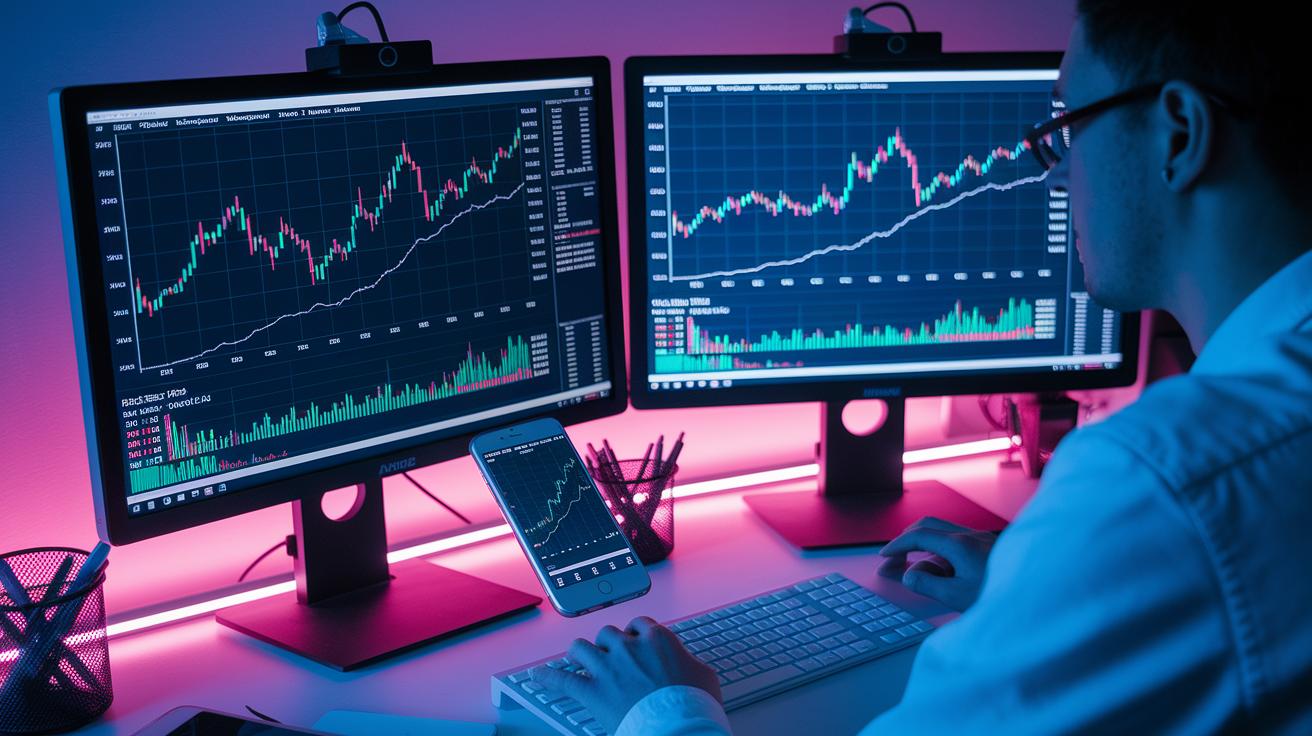
Crypto markets can be a wild ride with prices changing quickly because of market chatter, shifting rules, and big economic trends. Even popular altcoins can sometimes drop more than 80% in value during a downturn. It’s a good idea to take a thoughtful approach when figuring out how risky things might get.
Investors need to keep a close eye on risks that come from specific tokens as well as the overall market. By checking on things like how easily an asset can be turned to cash (liquidity, which tells you how quickly you can sell it) and making sure trading platforms are secure, you can handle uncertainty a lot better. In short, getting a handle on these details is key to building a strong system for managing risk.
- Regulatory changes
- Liquidity gaps
- Security breaches
- Market manipulation
- Macro shocks
Using risk-adjusted return metrics helps you see potential gains alongside the risks. This approach lets you balance the view of what you might earn against how shaky the market can be. By mixing a look at risks unique to digital money with traditional investment ideas, both short-term traders and long-term holders can manage bumps along the way, resulting in a sturdier investment plan.
Market Trend Evaluation for Crypto Investment Analysis: Forecasting Movements

Bitcoin's journey from a few cents to tens of thousands in price is truly eye-opening. This dramatic rise sets the stage for today's deep dives into market data. Experts now expect Bitcoin to reach a $1.8 trillion market cap by 2025, which shifts the focus from simply holding onto your coins to using sharper forecasting techniques. They mix hard data with readings on investor sentiment (that means checking out the overall mood in the market) and cycle analysis to predict what might come next.
| Crypto Asset | Consensus & Supply | Market Cap (2025) | Volatility Profile |
|---|---|---|---|
| Bitcoin | PoW, 21M cap | $1.8T | Lower |
| Ethereum | PoS, unlimited | $200B | Higher |
Forecasting has gotten even more precise by looking at how market moods shift over time. For instance, following a big political event, a sudden change in sentiment can lead to a fast surge in asset prices. This kind of insight shows that listening to what investors are feeling can reveal trends that standard cycle analysis might overlook.
Portfolio Optimization in Crypto Investment Analysis: Diversification Strategies
Optimizing your crypto portfolio means spreading your investments among big coins, decentralized finance tokens, stablecoins, and new altcoins. This way, you blend the steady strength of giants like Bitcoin and Ethereum with the exciting, sometimes unpredictable growth of coins like Litecoin and Solana. Long-term holding, for instance, can help cushion you against day-to-day market ups and downs, making your portfolio more resilient overall.
A smart strategy is to mix long-term holding with dollar cost averaging – that’s when you invest a set amount regularly. This method smooths out the wild swings of assets like Dogecoin and Shiba Inu, much like spreading out your favorite ingredients to create a balanced meal. By following well-thought-out frameworks for investment analysis and portfolio management, you develop a simple blueprint to allocate your digital assets and protect your investments over time.
Staying on track is key, so consider rebalancing your portfolio every few months and keeping an eye on performance. This approach helps you stay aligned with market changes and ensures your strategy continues to work for you.
Final Words
In the action, we explored core methods for crypto investment analysis, breaking down both technical tools and fundamental evaluations. We covered market trend evaluation, risk assessment, and portfolio diversification strategies that help shape sound digital asset choices.
These insights serve as a guide for making balanced decisions. Keep your focus on emerging trends and reliable analysis as you build a strong digital asset portfolio. Enjoy the process and stay confident in your investment steps.
FAQ
Q: What does the best crypto investment analysis do?
A: The best crypto investment analysis blends fundamental methods (assessing community, tech, and tokenomics) with technical studies (examining charts and indicators) to reveal trends and overall digital asset potential.
Q: What are prime crypto analysis resources available?
A: Prime crypto analysis resources include user-friendly websites and PDFs that cover fundamental details (team, tech, tokenomics) and technical charts (indicators, patterns), offering essential insights for smart investment choices.
Q: What should cryptocurrency beginners know?
A: Cryptocurrency for beginners means grasping basics like wallet security, simple trading strategies, and market trends, allowing you to build an informed, cautious approach while learning how digital transactions move.
Q: Why do some say cryptocurrency is bad?
A: The view that cryptocurrency is bad comes from its high volatility, unclear regulations, and security risks, which can result in sudden losses if proper risk management isn’t in place.
Q: What are 10 reasons to invest in cryptocurrency?
A: Ten reasons to invest in cryptocurrency include potential high returns, diversification, growing tech adoption, decentralization, global reach, innovative models, low entry barriers, transparent transactions, supportive communities, and a hedge against traditional assets.
Q: How should one analyze crypto investments?
A: Analyzing crypto investments involves blending fundamental studies (tech, community, tokenomics) with technical chart reviews (price trends, indicators) to spot promising growth and control risk with evolving market insights.
Q: Is crypto a good investment currently?
A: Crypto can be a good investment if high growth potential is balanced against volatility and regulatory shifts. Savvy investors focus on balanced strategies that manage risks while exploring innovative returns.
Q: What is the 1% rule in crypto?
A: The 1% rule in crypto means risking only 1% of your portfolio on a single trade. This risk management approach helps protect your overall investment while you explore potential market opportunities.
Q: What if you invested $1000 in Bitcoin 10 years ago?
A: Investing $1000 in Bitcoin a decade ago likely would have resulted in remarkable gains today, reflecting Bitcoin’s growth from a few cents to tens of thousands, and showing the dramatic benefits of early crypto investment.
