
Ever wondered what happens when a blockchain takes two paths? Picture yourself on a road that suddenly splits, offering a fresh route that could make your transactions both quicker and safer.
In these moments, smart updates choose a direction, one path might become the main network while the other opens the door to new ideas. This post shows how such splits push digital ledgers forward, keeping pace with fast-changing tech. Let's dive in and see how a small tweak can lead to big change.
blockchain forks Spark Bold Network Innovation

Blockchain forks happen when the rules of a digital ledger get updated, causing the chain to split into two different paths. It’s like driving on a road that suddenly divides into two routes, one might grow into the main street while the other stays as a side passage. (A digital ledger is simply a record of transactions, and a blockchain is one very secure way to keep that record.)
These splits usually come from a deliberate decision, such as when new features are introduced or security improvements are needed. For instance, a network may update its system to speed up transactions or to strengthen its defenses. Sometimes, though, disagreements within the community can also lead to these forks. And yes, occasionally forks occur by accident when two miners generate blocks almost at the same time. In that case, the network generally follows the longer chain to heal the split.
Forks are crucial for the growth and improvement of digital ledgers. By updating the rules or addressing weak spots, blockchain networks can keep up with new technology and user needs. It’s a bit like a steady pulse that keeps the entire system vibrant and adaptable. Imagine that even after a key update, older computers on the network (or nodes) can still take part under certain conditions. It’s a small tweak that points to the network’s strong ability to bounce back.
In short, blockchain forks are not mistakes. They are important adjustments that push forward the evolution of the system, ensuring it stays up-to-date and ready for the challenges of the digital world.
Comparing Blockchain Fork Types: Soft Forks vs Hard Forks
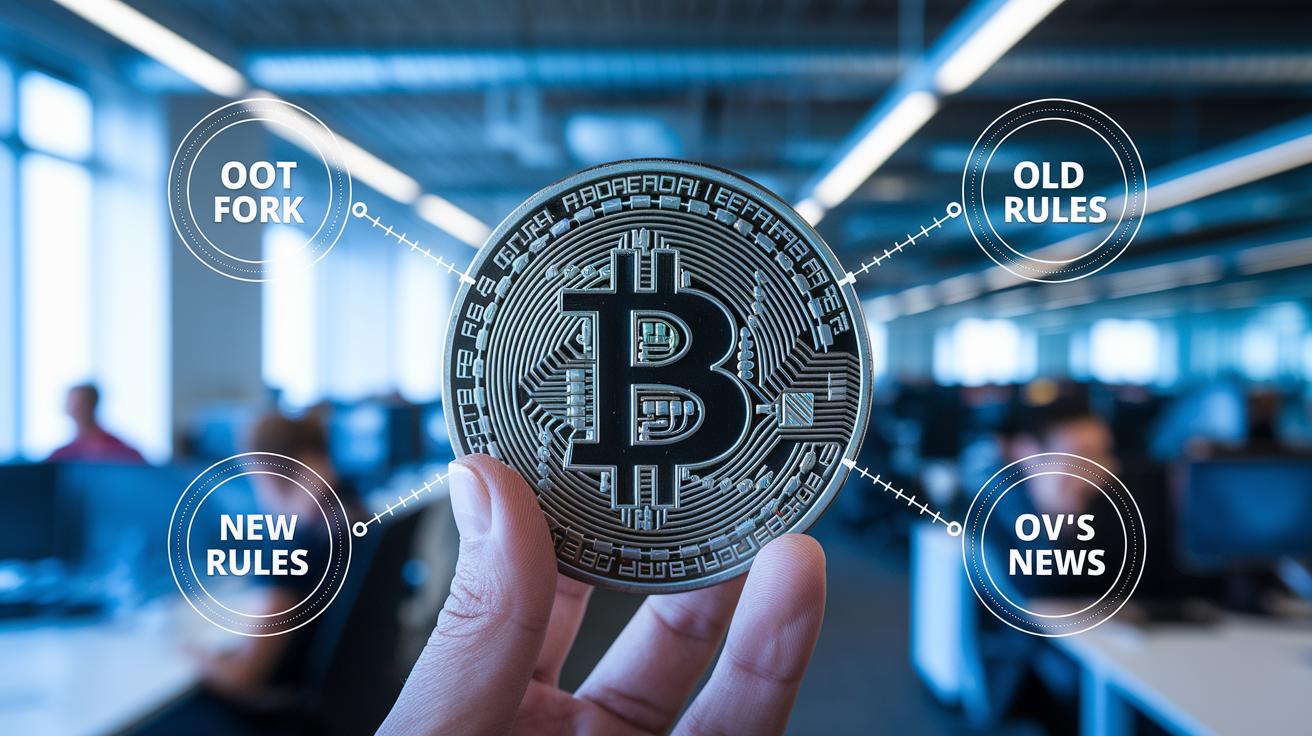
A soft fork is a change to the rules that still plays nice with the old system. In simple terms, even if not everyone updates right away, most nodes can still chat with those running the older rules. This means that even if some transactions or blocks no longer count, the network stays together. For instance, the SegWit update in 2017 tweaked how transaction data works without breaking existing connections.
On the flip side, a hard fork makes changes that don't mix with the old setup. This means if you don't update your software, you won't be able to work with the new blocks. The network splits into two paths: one that sticks with the old rules and one that follows the new ones for good. Bitcoin Cash is a good example, having split from Bitcoin in 2017 when the block size needed an upgrade.
The main difference is how each one handles node compatibility and what happens to the network chain. With a soft fork, most users continue to work together, while a hard fork creates two separate paths. It’s like deciding between a gentle tweak that keeps everyone together or a complete split that forms a new route.
| Soft Fork | Hard Fork |
|---|---|
| Changes that work with old rules | Changes that break with old rules |
| Network stays united | Network splits into two |
| Example: SegWit (2017) | Example: Bitcoin Cash (2017) |
When you compare them side by side, soft forks gently tune the system while hard forks make a clear break. Each has its own way of upgrading the network, and the choice depends on whether you want to keep everything connected or start a new chapter.
Technical Mechanics of Blockchain Forks

When rules differ among network participants, a unique cryptographic event occurs that splits one blockchain into two separate branches. Cryptographic algorithms like hash functions (they take any input and produce a fixed output) work quietly behind the scenes to help both chains keep their integrity intact. Even the smallest tweak in a protocol's code can generate two digital ledgers that operate in sync at first glance but soon follow very different rule sets.
Nodes, including those you can find on blockchain networks, check blocks by using their own set of rules. So, if the rules change and some nodes update while others don’t, the network experiences a conflict. This conflict may lead to a temporary split, much like two runners in a race where one gradually pulls ahead with the support of the community.
Network delays and slight differences among miners can also cause forks by accident. Imagine two miners producing blocks nearly at the same time. The network then follows a rule that picks the branch with more blocks, ensuring that the system quickly settles back to order. This way, even accidental splits are handled by clear rules built right into the system.
Hard forks, on the other hand, bring about major changes. They often introduce new chain IDs to stop replay attacks (where a transaction on one chain could be copied and used on another). Soft forks work more subtly. They rely on miners updating and signaling their support, usually around 95%, to keep the chain evolving without a dramatic split.
Here's a quick breakdown for clarity:
| Type of Fork | Key Feature |
|---|---|
| Hard Fork | Creates a new chain ID and a completely separate network |
| Soft Fork | Depends on miner signaling and maintains compatibility without splitting off completely |
Each process, whether by agreement or by chance, helps the blockchain stay robust and reliable through transparent systems, clear rules, and strong cryptographic safeguards.
Historical Case Studies of Blockchain Forks
Back in 2010, two miners almost produced blocks at the same time, causing a quick and accidental split in the network. It was a brief moment, but it showed how a blockchain can bounce back by following the longer chain.
In 2016, Ethereum hit a rough patch after the DAO hack, which allowed bad actors to steal funds. The community decided to repair the damage by splitting the network into two separate chains. One chain adopted new rules and became known as Ethereum (ETH), while the original chain stayed true to its initial design as Ethereum Classic. It’s a bit like a community choosing to revise part of its history while some members stick with the original record.
Then, in August 2017, Bitcoin faced a similar moment. Disagreements over changes meant to boost the network's capacity led to the creation of Bitcoin Cash. This split produced two active chains, each with its own rules and community. Imagine a familiar road suddenly dividing into two paths, each route designed to serve different needs.
By 2018, Bitcoin Gold emerged after the network adjusted its proof-of-work algorithm, which is the method used to secure the blockchain. This change aimed to keep mining fair and prevent it from being dominated by a few. The result was a brand new chain, shaped by a group that wanted a level playing field for everyone involved.
Implications of Blockchain Forks on Cryptocurrency Ecosystems

When blockchain splits happen, they shake up how tokens work and send ripples through the market. A split might create extra tokens, which can quickly pump up liquidity, just like when BCH airdrops helped boost BCH trading. Exchanges often get excited and list both token versions, which can lead to swift price changes and simple arbitrage plays for smart traders.
These splits can also change the total supply of tokens and even alter market capitalization. For instance, a sudden boost in token supply can shift investor mood and change trading habits. People begin weighing the benefits of the old chain versus the new one, leading to a mix of investment strategies.
On a practical note, wallet compatibility can get tricky after a split. If users don’t quickly claim their tokens on the new network, they might lose access to what was once a valuable asset. This situation often affects everyday holders who might not know that a split changes the way their wallet talks to the network.
Security takes a hit too when a split happens. With miner hash power spread across different networks, each token chain might become less secure. Smaller chains, especially, can face a higher risk of a 51% attack, where one party could control most of the network, denting investor trust and lowering token value.
In short, think of each fork as a ripple in a pond. Every split sends waves that touch pricing, security, and the everyday operations of digital finance.
Managing Risks and Governance in Blockchain Forks

Before changes happen, using on-chain voting and signals can really help prevent big splits. In simple terms, everyone gets a say by casting their votes and sharing their views on proposed updates. For example, a well-run DAO (a decentralized group of people making decisions together) can set clear rules for upgrades, which makes messy disputes much less likely.
When the rules shift, security takes center stage. Regular checks like audits and testnet simulations act like a quick look at your car's brakes before a long trip, you catch any issues before real transactions are affected. It’s like saying, "Test your assets just as you would test your car’s brakes for safe travels."
Another simple trick is replay protection. By giving each chain a unique ID, a blockchain keeps a safe distance between chains so that a transaction from one can’t accidentally pop up on another. This extra step helps both sides stay secure and stops any illicit activities.
Once a fork occurs, keeping an eye on things is vital. Monitoring the network’s overall health, how power is spread out (hash-rate), and any build-ups in transactions can quickly show if something feels off. For example, if you notice power swinging rapidly from one chain to another, it’s a clue that more controls might be needed.
Mixing careful pre-fork planning with steady post-fork checks keeps digital assets safe and sound. In short, these practices not only smooth out technical issues but also secure the community’s trust by keeping everyone on the same page.
Final Words
In the action, this article broke down the causes, types, and impacts of blockchain forks. We looked at how rule changes, including soft and hard splits, affect digital assets, examined technical mechanics, and recalled historical events shaping modern markets.
The discussion highlighted smart risk management and governance practices that secure diversified portfolios. Embracing blockchain forks opens up a secure path to achieving robust, informed digital asset investments while staying upbeat about future market trends.
FAQ
Q: Hard fork in blockchain
A: The hard fork in blockchain means making changes that break backward compatibility, resulting in a permanent split. This type forces nodes that stick to old rules to operate on a separate chain, often creating new tokens.
Q: Soft fork in blockchain and What is a soft fork
A: The soft fork in blockchain signifies a change that remains backward-compatible. Nodes that update still work with those that haven’t, while the new rules can render some blocks or transactions invalid without splitting the chain.
Q: Bitcoin forks list
A: The Bitcoin forks list shows splits like Bitcoin Cash and Bitcoin Gold. These forks emerged from disagreements over protocol upgrades or block-size concerns, giving rise to separate coins that run on slightly different rules.
Q: Soft fork vs hard fork and Soft fork and hard fork in blockchain
A: The soft fork vs hard fork comparison highlights that a soft fork preserves backward compatibility while a hard fork creates a non-compatible new chain. Hard forks split the network; soft forks adjust rules without full separation.
Q: Which type of blockchain fork is incompatible with existing rules
A: The type of blockchain fork that is incompatible with existing rules is known as a hard fork. It enforces new protocols that cannot be validated by nodes running previous versions, leading to network separation.
Q: What is a private blockchain
A: The private blockchain is a type of digital ledger controlled by a single organization. It limits public participation and access, allowing only authorized users to read, write, or manage transactions within the network.
Q: What is a fork in a blockchain?
A: The fork in a blockchain refers to any split in the chain where protocol rules diverge. These splits may create separate paths due to software upgrades, resolving disputes or technical issues via different community decisions.
Q: What is the best blockchain to fork?
A: The best blockchain to fork depends on your goals, such as community support and scalability. A project with a robust network and clear governance can offer a smoother transition when implementing changes or new features.
Q: How many types of forks are there in blockchain?
A: The types of forks in blockchain include at least two main categories: soft forks and hard forks. Some forks occur accidentally, but intentional splits generally fall into these two groups with distinct compatibility rules.
Q: What can trigger a blockchain fork?
A: The trigger for a blockchain fork can be protocol upgrades, security fixes, or disputes within the community. These events change consensus rules or address vulnerabilities, prompting nodes to follow separate paths in the network.
