
Have you ever thought blockchain coding might be the trick to boost your tech skills? It could really change the way you code.
With easy-to-use tools like Node.js (a program that helps run code outside your web browser), NPM (a tool to manage software packages), and Ganache (a tool that lets you test blockchain code on your computer), you can create your own coding space right at home.
Picture it like building a tower out of digital blocks. Every block of code you add makes your project stronger and clearer.
This guide will show you how blockchain coding can help you build secure apps that work in the real world and make coding fun. Get ready to step into a smart world of coding that brings new tech challenges your way.
Getting Started with Blockchain Coding: Setting Up Your Development Environment

Node.js and NPM are key tools in blockchain coding. They let you transform your computer into a JavaScript workhorse and add extra libraries easily. Ganache is another handy tool that creates a mini blockchain on your computer so you can try out transactions in a safe space. Did you know that even before big blockchain projects took off, developers relied on Ganache to experiment with their ideas? By using Node.js, NPM, and Ganache, you set up a full programming environment without leaning on cloud services.
Next, build on your setup by using frameworks like Truffle or Hardhat to simplify smart contract development. These tools compile, deploy, and test your contracts seamlessly, saving you both time and effort. And with MetaMask, you can connect your browser’s front end to your local blockchain. This makes it possible to see live updates and status alerts from your transactions, bringing your app to life.
Finally, keep your project organized by creating a folder named intro_to_blockchain. Inside this directory, use JavaScript classes to structure your code neatly. Add a SHA256 library to generate unique codes for your very first block, known as the genesis block. Think of it as building the secure foundation of a digital ledger, simple, clear, and effective as you prepare for more complex blockchain projects.
Blockchain Coding Languages: Comparing Top Programming Options

When you're starting a blockchain project, picking the right coding language is a big deal. It really depends on what you're trying to build. Some languages offer super-fast performance and rock-solid security, while others are easier to learn and come with a supportive community. For example, if speed and safety are your top concerns, Rust is often the choice. And if you need to write smart contracts, Solidity is a popular pick thanks to its worldwide network of developers. Matching the language features with your project needs can give your distributed ledger solution a real boost.
| Language | Use Case | Key Feature | Example Blockchain |
|---|---|---|---|
| Rust | High-performance dApps | Speed and safety | Solana |
| Go | Blockchain client development | Ease of learning | Ethereum (Geth) |
| C++ | Core blockchain protocols | Mature and powerful | Bitcoin |
| Solidity | Smart contract scripting | Extensive developer network | Ethereum |
| Move | Asset management | Resource-oriented design | Diem |
| Motoko | dApp canister deployment | Secure autonomous setup | Internet Computer |
| Java | Enterprise blockchain apps | Robust SDK support | Enterprise networks |
| JavaScript | dApp interactions | Rich library ecosystem | Various networks |
| Python | Blockchain scripting | High readability | Algorand |
When deciding which language to use, think about the ecosystem it supports, the performance levels it meets, and the tools you can rely on. It's not just writing lines of code, it’s about building a smooth, efficient development process. By aligning your choice with your project’s specific needs, you can set the stage for creating a strong and reliable blockchain system.
Blockchain Coding Smart Contract Programming Basics

Smart contracts are like digital agreements that take care of themselves. They run on blockchain networks (think of a secure digital ledger) and automatically do what they’re supposed to when conditions are met. This means you don’t need any middlemen, which makes transactions run faster and smoother. One of the leading languages for coding these contracts is Solidity. It borrows a clear style from TypeScript, making the code easy to read and secure. Imagine a contract that instantly sends funds once everything is in place, that’s the real strength of Solidity.
When it comes to smart contract programming, a few key functions are the building blocks of reliable code. Take addBlockToChain(), which simply adds a new block to the chain; getChain(), which pulls up detailed information about a block; and getChainCount(), which tells you exactly how many blocks are in the ledger. With over 200,000 developers using Solidity on Ethereum, there’s a growing community that keeps refining smart contract design patterns. These basic functions not only power the contracts but also ensure that every transaction is processed with care and clarity. This ever-evolving approach helps developers create stronger applications while sparking new ideas with every block.
Blockchain Coding Example: Building Your First Genesis Block and Smart Contract

In this project, we'll show you how to create a simple digital ledger and run a smart contract. You’ll use a folder named "intro_to_blockchain" where a JavaScript class becomes the core of your blockchain, and a SHA256 library (a tool that changes data into a unique code) protects each block with its own distinct fingerprint. Think of it as building a mini digital world where each part works together, combining easy-to-follow steps with both JavaScript and smart contract setup.
Creating a Genesis Block
Begin by making a Block class in JavaScript. In this class, add details like the block’s own hash, the hash from the block before it, and any transaction details that matter. Use the SHA256 library to make that unique code. Ever wonder how cool it is to turn simple data into something as secure as a secret code? This very first block, often called the genesis block, is the trusted starting point of your blockchain.
Connecting Blocks via Previous Hash
After your genesis block is ready, create a function, addBlockToChain, that adds new blocks to a list. Each new block holds the hash of the block that came before it. This connection makes sure that every block is linked and secure, making it really tough for someone to tamper with the chain.
Writing, Compiling, and Deploying a Solidity Contract
Next, write a smart contract using Solidity (a programming language for smart agreements that run on the blockchain). Set up your Truffle configuration and send your contract out to a local Ganache network (a testing platform that mimics a real blockchain). Then, test out the key functions by trying simple inputs, say, giving it a number like “10” or a valid Ethereum address, to see if your functions like addBlockToChain, getChain, and getChainCount work as expected.
Steps to follow:
| Step | Description |
|---|---|
| 1 | Create the “intro_to_blockchain” directory. |
| 2 | Build a Block class in JavaScript and use SHA256 for hashing. |
| 3 | Establish your genesis block and use addBlockToChain for new blocks. |
| 4 | Configure Truffle and deploy your Solidity smart contract with Ganache. |
| 5 | Run tests by calling getChainCount() and checking the block details. |
Blockchain Coding Best Practices: Security Patterns and Code Quality

When you’re building smart contracts, the first step is to lean on design patterns you know work well. Think of patterns like Factory (a way to generate multiple contracts smoothly), Proxy (a helper to manage calls efficiently), and Ownable (a simple system to mark who’s in charge). These patterns give your smart contracts a clear structure and help you avoid the usual traps that might trip you up.
It’s also super helpful to use testing tools like Hardhat or Truffle. These tools run both small unit tests and bigger integration tests, giving you peace of mind that your code will perform as expected. Choosing the right language and framework for your project not only boosts performance but keeps development simple and reliable. In short, clear design patterns act like blueprints that guide you to a neat and solid codebase that stands up to today’s crypto engineering demands.
Regular code reviews and using formal verification tools are like having a trusted friend check your work when you solve a tricky math problem. They catch logical errors before they become a problem, ensuring your smart contracts do exactly what you intend. Matching your development approach with the needs of your ecosystem keeps gas costs low and makes sure transactions run smoothly across the network. All in all, a smart blend of tested design patterns, rigorous testing routines, and constant peer reviews builds a strong foundation where blockchain projects can truly thrive.
Blockchain Coding Optimization: Reducing Gas Costs and Performance Tuning

Cutting gas costs is a big deal. It lowers the price for users and helps the network run without clogging up. Take Solana, for example. Its fees are below one cent per transaction, which shows how important it is to keep things efficient. On Ethereum, using less gas means users pay less and the network stays smooth. When your code uses fewer resources, it makes room for more transactions and quicker performance.
There are four simple ways to make Ethereum smart contracts work better. First, try to limit state writes, which is like reducing the amount of data stored on the blockchain. Second, pack your storage variables neatly; think of it as organizing your closet to save space. Third, use view or pure functions (read-only functions that don’t need extra gas) whenever possible. And fourth, put any repeated logic into libraries so you don't write the same code twice. Together, these tactics make your smart contracts leaner and more cost-effective.
Blockchain Coding for Decentralized Applications: Integrating Frontend and Smart Contracts
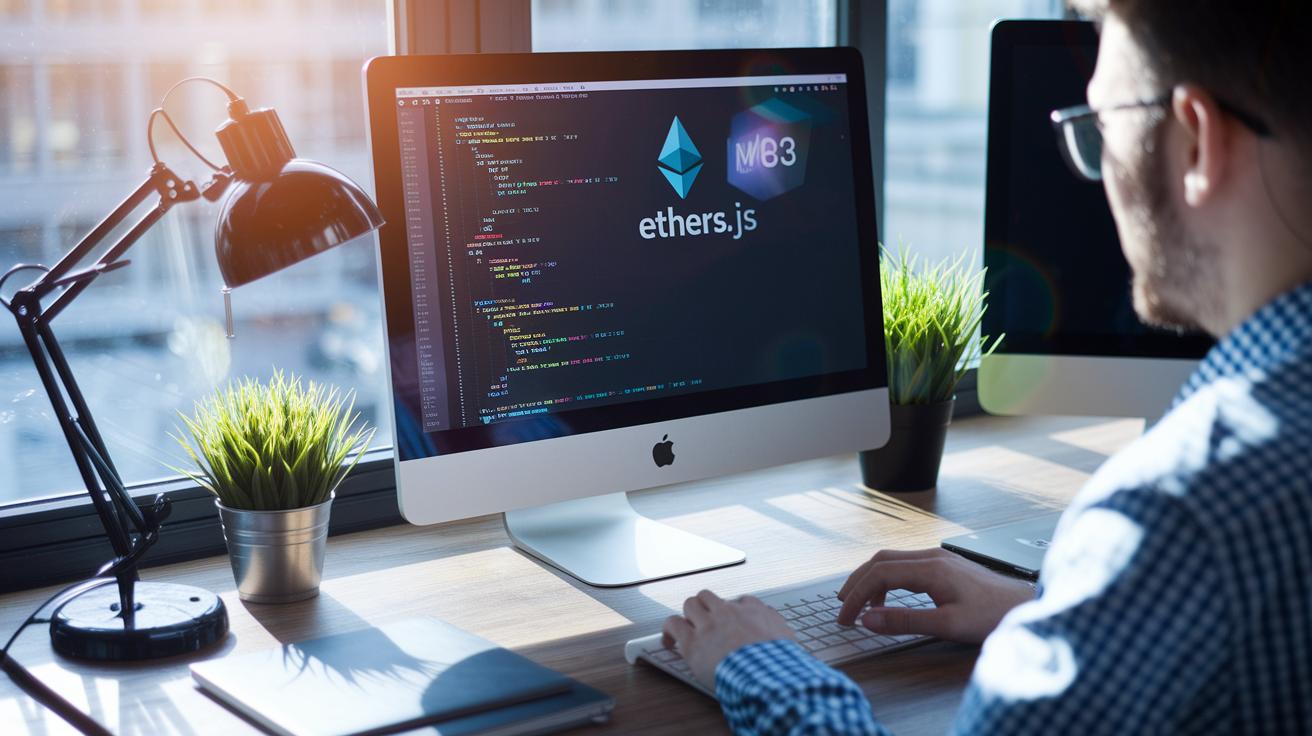
If you're jumping into blockchain coding, using a JavaScript SDK like web3.js or ethers.js is a real game changer. These tools (basically a set of programming helpers) let your browser communicate live with smart contracts (self-executing programs on the blockchain). It’s like giving your app a heartbeat. And when you hook up a wallet like MetaMask, you can sign transactions safely right from your website. Picture this: you add a wallet extension and suddenly your favorite decentralized app is ready to process real-time transactions, much like a cash register in your local store.
Building interactive UI components takes the experience to a new level. Imagine designing a React-based newsfeed where users see updates immediately as new blocks are added. UI elements that let you create posts, tip tokens, or fetch user details bring the blockchain straight to life. A simple button click that triggers a smart contract to tip another user feels just as natural as handing over cash. This hands-on setup not only smooths the communication between the blockchain and the user interface, but it also offers developers a practical way to experiment, test, and fine-tune these decentralized systems in real time.
Final Words
In the action, you saw how to set up your tools with Node.js, configure your environment with Ganache and MetaMask, and even build your genesis block using JavaScript with a SHA256 library. We also compared key programming languages and explored smart contract foundations, best practices, and performance tuning, all while keeping your project running smoothly.
Keep experimenting, stay curious, and enjoy the process of refining your digital asset portfolio through blockchain coding.
FAQ
What does blockchain coding Reddit discuss?
Blockchain coding Reddit discussions focus on sharing coding tips, language recommendations, and project insights. These conversations help developers improve their skills and solve challenges in building blockchain applications.
What blockchain coding language is used and which one is best?
Blockchain coding uses languages such as Solidity for smart contracts, Go for Ethereum clients, and Rust for high performance. The best language depends on your project needs and the scale of your application.
How can beginners get started with blockchain coding?
Beginners learn blockchain coding by taking online courses, experimenting with simple code examples, and setting up a basic environment using tools like Node.js and Ganache. Community forums also offer helpful guidance.
What is a blockchain coding course?
A blockchain coding course teaches the fundamentals of blockchain technology, guiding you through environment setup, smart contract development, and hands-on projects to build practical coding skills in blockchain development.
What is a blockchain code example?
A blockchain code example typically demonstrates how to create a block with a unique hash, connect it securely using previous block hashes, and deploy a smart contract via frameworks like Truffle, making the concepts tangible.
What is the salary range for a blockchain coder?
The blockchain coder salary reflects specialized skills and varies with experience and project complexity. Market trends show competitive compensation, often boosting earnings as expertise and demand grow.
What role does Python play in blockchain coding?
Blockchain coding in Python utilizes the language’s clarity and wide library support to create prototypes and develop blockchain applications efficiently, making it a popular choice for quick, readable code projects.
How difficult is blockchain coding?
Blockchain coding difficulty depends on your programming background. For those new to coding, grasping blockchain concepts can seem challenging, but accessible courses and community support make learning the concepts achievable.
What are some common blockchain programming languages?
Common blockchain programming languages include Solidity, Go, Rust, Python, Java, and JavaScript. Each language offers distinct strengths in areas like transaction efficiency, smart contract development, or user interface integration.
