
Ever thought your smart contract might run smoother and cost you less? You can tune it up to save resources (gas fees are like the fuel costs for your contract) while keeping transactions on track. Imagine it like tweaking a well-tuned engine to perform at its best. When you adjust how data is stored and accessed, you cut out extra expenses and boost speed. In short, we'll dive into easy, practical tips to lower gas costs, turning everyday coding tweaks into real savings for your projects.
Gas Fee Fundamentals and Smart Contract Optimization
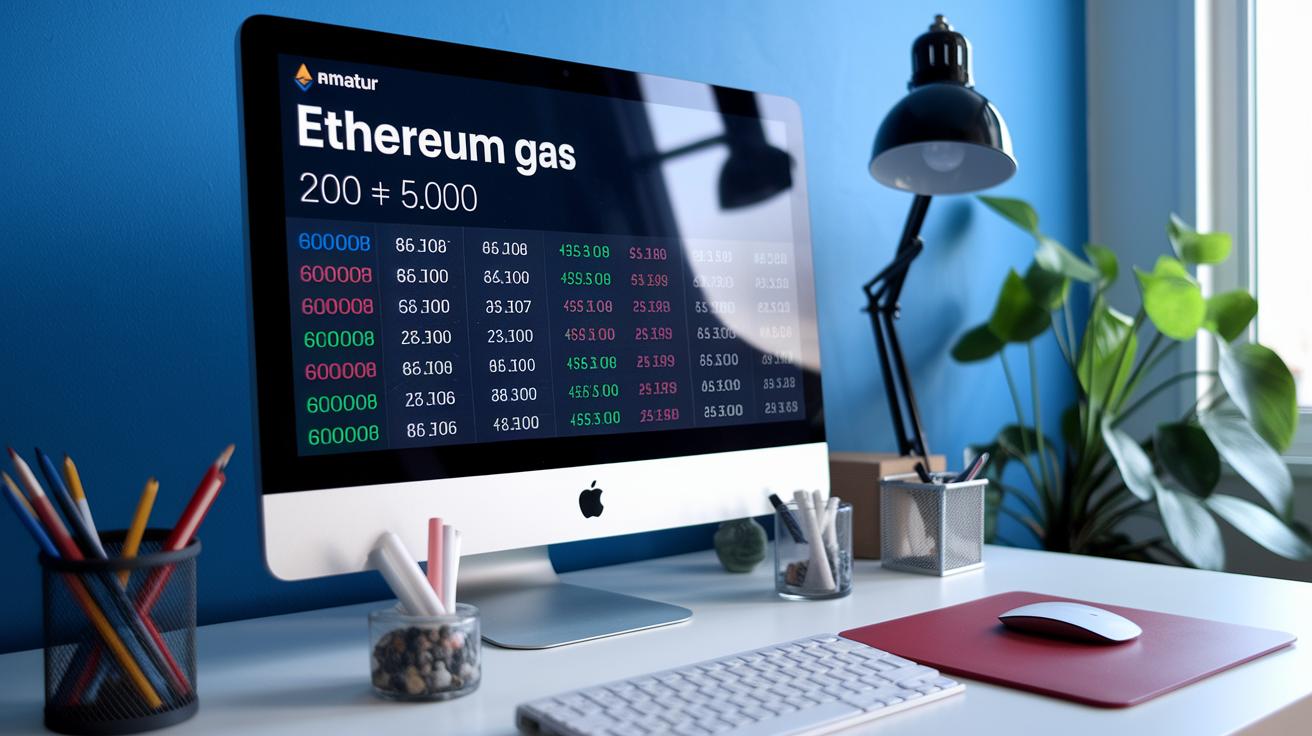
Gas is the measure of the work needed to run actions on Ethereum. For example, simply checking stored data might cost about 200 gas, while adding new data can use around 20,000 gas. Even updating existing data often uses roughly 5,000 gas. If you're curious about the basics of smart contracts (self-executing programs on the blockchain that run when certain conditions are met), take a look at this link: https://nftcellar.net?p=1344.
Understanding these figures helps you see what drives costs in your smart contracts. Think of gas usage like the heartbeat of your transaction fees. Every function call, every bit of stored data, and every action adds up in these numbers. For instance, choosing the right data types and packing variables smartly can lower the storage needed, which in turn cuts down gas costs. Deciding between using a mapping (which quickly finds data using unique keys) or an array (which may require checking each element) can also make a big difference.
There’s more to consider, like the difference between memory and storage. Memory, which is temporary and cheaper, can be used to save money compared to storage that holds data permanently. Even small changes, like declaring variables as constant or immutable, can help reduce gas expenses and make it easier to predict costs. Paying attention to these details not only minimizes fees but also keeps the Ethereum network running smoothly while ensuring each transaction stays cost-effective.
Solidity Code Efficiency Methods for Gas Optimization

Eliminating Redundant Storage Reads
When your contract keeps reading the same data from storage, it ends up costing more gas. Instead, grab the value once and save it in a local variable for later use. This simple switch can sometimes shave off about 20% in gas costs. It’s like having your favorite snack nearby rather than going back to the kitchen all the time.
Data Packing and Variable Declaration
Smart contracts use less gas when you pack smaller, similar data types into one storage slot. Imagine fitting several small tools into one neatly organized toolbox instead of using a whole new box for each. Also, declaring variables as constant or immutable means they won’t waste gas by being rewritten over and over. Plus, avoid initializing them to default values if you don’t really need to, every little bit helps.
Assembly and Unchecked Math
Using inline assembly can let you bypass some of Solidity’s high-level operations, which saves you more gas. When you deal with data blocks of 96 bytes or less, inline Yul streamlines how memory is handled, cutting down on extra costs. And if you’re sure your math will stay within safe limits, wrapping those operations in an unchecked block skips Solidity’s overflow checks, saving gas with every calculation step. These tweaks, when combined thoughtfully, give your contracts a smart edge in efficiency.
Storage Optimization Techniques in Smart Contracts

Smart contract design is all about managing your state variables in a smart way because every time you store data, it adds extra gas costs. It’s like using every drop of fuel wisely to get the best performance out of your engine.
One clever trick is to avoid changing a storage value from zero to one. This operation can be very costly, similar to paying a high bill when updating your records. Instead, you can use SSTORE2 (a method that stores data right in the contract’s code and lets you pull it later using a special address) to save on gas and keep things running smoothly.
Looking ahead, there’s even more promise on the horizon with SSTORE3 (a newer method that is expected to lower costs even further) when it comes available. And don’t overlook the gas refund you get during DELETE operations. When you remove unwanted data, a part of the spent gas is returned, turning cleanup into a cost-effective chore.
For bulk data, it helps to swap out arrays for mappings or bitmaps. Think of it like organizing a toolbox: each tool has its own spot, so you don’t waste time looking through a jumbled mess. Plus, keeping strings under 32 bytes and marking variables as constant or immutable really cuts down on unnecessary write operations, much like fine-tuning a machine for peak performance.
Every small decision you make in how you store data adds up to major gas savings. It’s a bit like working on a car, each little tweak and adjustment leads to better efficiency and a smoother ride while saving money in the long run.
Compiler Configurations and Deployment Cost Savings

Enabling and Tuning Compiler Optimizer
Solidity’s optimizer works like a balancing act between code size and performance speed. By tweaking the optimizer runs setting, you can boost your contract’s efficiency. For example, setting a higher run count lets the optimizer trim repeated code in parts that run often, which means lower gas fees every time you execute a function. Also, using the –no-cbor-metadata flag helps cut out extra IPFS metadata, making your deployment leaner. Developers can further boost efficiency by adjusting the evmVersion setting to suit the specific Ethereum network they’re using. Think of it like adjusting your recipe, each little tweak helps reduce processing overhead and keeps things running smoothly.
Compact Deployment Patterns
Saving on deployment costs isn’t just about the code itself, it’s also about how you design your constructors and deploy your contracts. For example, making constructors payable can save gas by streamlining initial setup. Plus, by predicting contract addresses using your account nonce, you can skip extra storage variable deployments that only serve to hold an address. Minimal proxy clones, as defined in EIP-1167, let you share implementation code using a compact proxy, which cuts down on the overall deployment size. In some cases, using selfdestruct lets a contract clear out after its job is done, lowering the total cost. And don’t forget about custom errors, they’re shorter than require strings and help trim down your bytecode further.
Altogether, using these solc settings and smart deployment patterns creates a cost-effective model that slashes both setup and run-time gas fees, keeping your contract nimble and efficient during those critical operations.
Smart Contract Gas Optimization: Boosting Efficiency

Lowering gas fees starts with smart design choices and a few low-level code tweaks. When you combine thoughtful design with assembly-level adjustments (small pieces of code that run directly on the Ethereum Virtual Machine, or EVM), you cut out unnecessary operations that can drive up gas costs. For instance, using ERC-2930 access lists lets you pre-load storage slots and contract addresses. In plain terms, your contract can fetch data quicker and spend fewer gas units when starting from a cold state.
Another neat trick is to use fallback or receive functions for ETH transfers instead of explicit deposit functions. This way, you remove extra steps that usually slow down transactions. And if your contract handles several similar tasks, grouping them with multicall or multidelegatecall techniques can save you from doing the same work over and over. Think of it like doing all your grocery shopping in one go instead of making several stops.
You can take things a step further with ECDSA permit signatures. With these, you merge approval and transfer into one smooth move, trimming gas costs one operation at a time.
Inline assembly offers further improvements. Instead of relying on more complex checks like ISZERO(EQ()) for conditions, switching to simpler operations like SUB or XOR can boost efficiency. For example, you might swap out ISZERO(EQ(x,0)) with XOR(x,0) for a leaner check. You can also compare selfbalance with address(this).balance directly and reuse memory space across calls to avoid needless reallocation.
| Strategy | Description |
|---|---|
| ERC-2930 Access Lists | Pre-loads storage slots and addresses for faster data access. |
| Fallback/Receive Functions | Simplifies ETH transfers by cutting unnecessary steps. |
| Batching Calls | Uses multicall or multidelegatecall to reduce repeated overhead. |
| ECDSA Permits | Merges approval and transfer into one efficient action. |
| Inline Assembly | Optimizes arithmetic and memory usage with low-level tweaks. |
Each of these techniques, when used together, creates a more efficient, faster contract. Instead of wasting gas at each step, you build a lean system that works smartly to save on every operation. Isn't it fascinating how a few thoughtful changes can make such a big difference?
Benchmarking and Gas Profiling Tools for Smart Contract Optimization

Benchmarking and gas profiling tools are a real lifesaver for smart contract developers. They let you measure exactly how much it costs to run a contract and check if your efforts to cut down on gas (the fee for blockchain operations) truly pay off. These tools offer clear before-and-after snapshots of contract functions and compare the costs of deploying versus actually running them. Developers can set up dashboards to track gas usage for each call, making it a breeze to spot costly steps. And by using gas estimation APIs along with local forks (basically, testing your blockchain code in a safe environment), you turn a lot of guesswork into smart, data-driven decisions. It’s kind of like giving your home a quick energy upgrade and watching your bills shrink.
These frameworks do more than just prove that your tweaks work, they also reveal parts of your code that could use extra fine-tuning. For instance, when you compare gas usage across similar transactions, hidden inefficiencies might pop up. This close look at how much each operation costs helps build better fee prediction models and finds the sweet spot between cost and performance. When developers see clear, measurable improvements, they get that boost of confidence to optimize even further and adjust their strategies as needed.
| Tool | Key Feature | Usage |
|---|---|---|
| Remix Gas Profiler | In-browser gas insight | Real-time function metrics |
| Hardhat Gas Reporter | Detailed gas reports | Integration with testing suites |
| Tenderly | Simulation and tracking | Transaction profiling and analytics |
| Ganache | Local blockchain simulation | Pre-deployment forecasting |
Common Pitfalls, Trade-offs, and Best Practices in Gas Optimization

Cutting down on gas, which is the fee you pay to run a smart contract, may seem small but even tiny mistakes can add up over time. For instance, using shortcuts like checking gasleft() without a backup or calling send() without verifying its success may save a bit of gas initially but can leave your contract exposed if things go wrong.
Older methods such as switching between external and public functions, or using "!=0" instead of ">0," might not save much now and can make your code messy. Even though inline assembly can be a powerful tool, it often makes your code harder to follow and can lead to security risks if not handled with extra care.
Here are some friendly tips to keep in mind:
- Don’t take dangerous shortcuts without proper safety checks.
- Look for newer methods that keep your code short and clear.
- Keep your code simple so that it’s easy to understand and review.
- Always balance lowering fees with the need for safe and clear logic.
Every choice you make should weigh getting the best performance against keeping your system secure.
Final Words
In the action, this article broke down key concepts from gas fee fundamentals to code efficiency and storage techniques. We explored how each step, from setting precise compiler configurations to using innovative on-chain tricks, can reduce Ethereum transaction costs while keeping investments secure. You now have a clearer picture of smart contract gas optimization, backed by benchmarking tools and best practices for risk management. Embracing these strategies offers promise for a more efficient digital asset journey, with insightful, practical fixes to keep your portfolio both balanced and agile.
FAQ
Smart contract gas optimization review
The smart contract gas optimization review examines methods to reduce execution costs by refining operations, variable usage, and storage techniques to achieve lower transaction fees on the Ethereum network.
Smart contract gas optimization ethereum
The smart contract gas optimization on Ethereum involves strategies like efficient variable handling, caching, and assembly integration to reduce gas consumption and lower expenses when executing transactions.
Smart contract gas optimization example
The smart contract gas optimization example demonstrates using constants, local memory caching, and inline assembly to cut gas usage. This practical approach helps limit runtime computation and state changes.
Smart contract gas optimization calculator
The smart contract gas optimization calculator provides an estimate of gas costs based on function calls and operations, allowing developers to compare optimizations and better manage transaction fees.
Solidity gas cost table
The solidity gas cost table details the gas required for various operations, like reading or writing to storage. It acts as a handy reference to design more gas-efficient smart contracts.
Solidity gas refund
The solidity gas refund returns part of the gas spent when certain storage values are cleared. This mechanism helps developers save costs by reducing long-term storage burdens on the blockchain.
Remix IDE
The Remix IDE is a web-based tool used for writing, testing, and deploying smart contracts. It offers real-time gas usage insights, making it useful for adjusting and optimizing code performance.
Smart contract best practices
The smart contract best practices include writing clear, efficient code, managing storage wisely, and incorporating error handling. Following these tips helps minimize gas consumption and uphold security standards.
What is gas optimization in Solidity and what is gas optimization?
Gas optimization in Solidity means refining code to lower computational effort per operation. This process reduces the gas fees required for executing transactions and speeds up contract performance.
What is gas in smart contracts?
Gas in smart contracts is the fee paid to process and validate transactions on the Ethereum network. It measures the work needed to perform each operation and keeps the system running.
What is the gas fee in a smart contract?
The gas fee in a smart contract is the cost incurred to execute its functions on the blockchain. It compensates network participants who process and secure the transaction data.
