
Have you ever wondered if the feelings of investors might hint at the next big market move? Imagine a system that listens to everyday talk and turns it into clear signals to help navigate market ups and downs. Tools break down chats and news into simple mood scores so you can see how optimism (a hopeful feeling) and caution (a careful approach) shape investing.
It’s a bit like reading the pulse of a busy crowd. Even small shifts in mood can point to larger opportunities and spark a fresh sense of hope. In short, these tiny emotional nudges might just be the clues you need to ride the wave of market trends.
Defining Market Sentiment Trends Analysis for Financial Markets
Market sentiment trends help us understand how investors feel. We use tools like natural language processing (a way to break down and understand everyday text) and machine learning (tech that teaches computers to learn from patterns) to sift through news, social media posts, and financial reports. Basically, this method turns common language into clear signals that can hint at future stock movements.
We follow a six-step process to pull these insights together. First, we set up the project and gather information from many different sources. Then, we break down the overall mood by scanning public messages and giving them simple mood scores.
Next, we dive into emotion classification. Here, smart tools tag feelings like optimism or caution, helping us pinpoint investors’ emotions. One cool step is the emoji frequency analysis. We look at about 10 billion emojis every day – that’s roughly 7 million per minute – which helps us catch those little signals that words alone might miss.
After that, we use topic modeling to group similar discussions into clear themes. Finally, we track changes in sentiment over days, weeks, or months to see how the mood shifts. Ever notice how small details can reveal a bigger picture? That’s what this process is all about.
We also mix historical data with Twitter trends to double-check our findings using tests like Granger causality testing (a method to see if one change can predict another). Real-time dashboards with fast, high-performance visuals help traders and analysts see millions of data points almost instantly. This means every rise or drop in investor mood is captured right away.
| Project setup | Sentiment breakdown |
|---|---|
| Emotion classification | Emoji frequency analysis |
| Topic modeling | Time-series tracking |
Each step of this process turns public mood into useful market insights, offering a friendly guide to understanding what could drive future shifts in the financial markets.
Key Metrics and Indicators in Market Sentiment Trends Analysis

Market sentiment trends analysis uses clear numbers to show how investors feel. A social media sentiment score, for example, looks at posts online to decide if they are mostly negative or positive. It uses a scale from -1 to +1, so a score like +0.8 tells us that optimism is running high.
The news tone index works in a similar way by scoring how positive or negative news headlines are. When you see a score around 70 out of 100, it usually means the news is looking up and might push stock prices higher. Sometimes you might even see a line like, "A news tone index of 70 signals bright prospects ahead."
Then there is the trading volume sentiment correlation. This number shows if changes in market mood line up with bursts in trading activity, hinting at possible big moves in price. The option put-call ratio is also useful; a lower ratio can mean a bullish market, while a higher ratio suggests that traders are being extra cautious.
We also look to consumer confidence indicators, which come from well-known surveys and help paint a broader picture of the economy. Lastly, the volatility sentiment index ties sudden price swings to changes in mood among investors. Experts back up these measures by checking how they match up with real trading volumes and price shifts.
- Social media sentiment score
- News tone index
- Trading volume sentiment correlation
- Option put/call ratio
- Consumer confidence indicator
- Volatility sentiment index
Analytical Frameworks for Market Sentiment Trends Analysis

Think of market sentiment analysis as catching the room's vibe. Lexicon-based tools like VADER work by breaking down text to see if the words lean positive or negative. For example, when you read a headline like "Stocks soar as optimism grows," VADER clicks a positive score. It’s like hearing the cheerful hum of a crowd. Meanwhile, machine learning models such as SVM, random forests, and even neural networks like LSTM turn messy words into clear scores that show whether investor moods are happy or gloomy.
Then, there are hybrid methods that mix these clear numbers with more human impressions. Imagine reading a quick news snippet that makes you pause and think, "Something's shifting here," while the data backs up that gut feeling. Tools like topic modeling (LDA, which helps group related words) and trend segmentation work together to spotlight emerging themes that guide market sentiment over time.
Lastly, when you blend in predictive analytics, these insights get even sharper by matching sentiment scores with likely price moves or shifts in volatility. Picture a dashboard that weaves real-time sentiment with price charts, helping you decide fast when trends turn. Learn more about weaving trend analysis into market research here: integrating trend analysis with market research.
Data Sources and Tools for Market Sentiment Trends Analysis

When you tap into the market's mood in real time, you use a mix of different data points that build your insights. For instance, many investors start with live messages from Twitter, lively chats on Reddit, and the buzz on StockTwits. Traditional sources, such as RSS feeds and financial newswires, add their own clear signals too. You might also check SEC filings or listen in on earnings call transcripts to get a fuller picture.
Alternative data sets can add an extra layer of insight. Imagine watching online search trends that show what people are curious about or using satellite images to see how busy stores are. Even looking at consumer transaction data can offer another angle on the market's pulse.
Popular tools in the field include Bloomberg Sentiment Analysis and Thomson Reuters News Analytics. Think of it like mixing your favorite recipe, where each specialized tool, alongside custom Python toolkits like NLTK (a set of tools for language processing) or spaCy (which helps parse text), plays its part. A typical example might be: "Start with a fun fact – in one minute, millions of tweets can change the overall sentiment, showing a clear picture of collective investor optimism."
Real-time sentiment tracking depends on powerful big data pipelines and live text-mining methods. This means commercial APIs work hand in hand with in-house systems to ensure that your sentiment metrics are always fresh and precise.
- Twitter API
- Reddit and StockTwits feeds
- RSS feeds and newswire services
- Custom Python solutions
- Commercial API-based platforms
Case Studies in Market Sentiment Trends Analysis

Nvidia Feb 7, 2025 Sentiment Overview
On February 7, 2025, Twitter and news reports showed a clear rise in investor mood. Positive tweets jumped by 20% after Nvidia’s earnings report, and analysts saw this as a sign of growing optimism. They turned investor comments into easy-to-read scores that matched a 5% jump in Nvidia's stock price. They even used a test called Granger causality testing (a way to see if one set of numbers can hint at changes in another) to check if these cheerful tweets led the stock price to rise. On the day of the earnings report, the burst of positive tweets acted like an early warning sign, showing that traders were ready to move as soon as they saw the trend. Watching these online chats gave investors a real-time peek at the company's financial health, proving that tracking sentiment can help forecast market moves during earnings season.
Nvidia May 15, 2025 Emoji Analysis
On May 15, 2025, a deep dive into emoji use further revealed the strength of sentiment trends. Analysts noticed a 15% rise in bullish emojis – those little happy icons that show investor excitement – across various social media sites. These emojis turned into a shortcut for understanding how excited investors were feeling and lined up with a quick 8% boost in Nvidia’s stock during the day. The study looked at several key points:
| Data Point | Observation |
|---|---|
| Bullish Emoji Count | Increased by 15% |
| Time-Synced Price Data | Matched short-term gains |
| Granger Causality Test | Showed leading relationship |
This example shows how combining visual symbols with price data can give a fuller picture of what investors are really thinking. By looking at both text and emojis, we can see a more detailed story in investor behavior and sharpen our predictions about market trends.
Visualization Techniques for Market Sentiment Trends Analysis
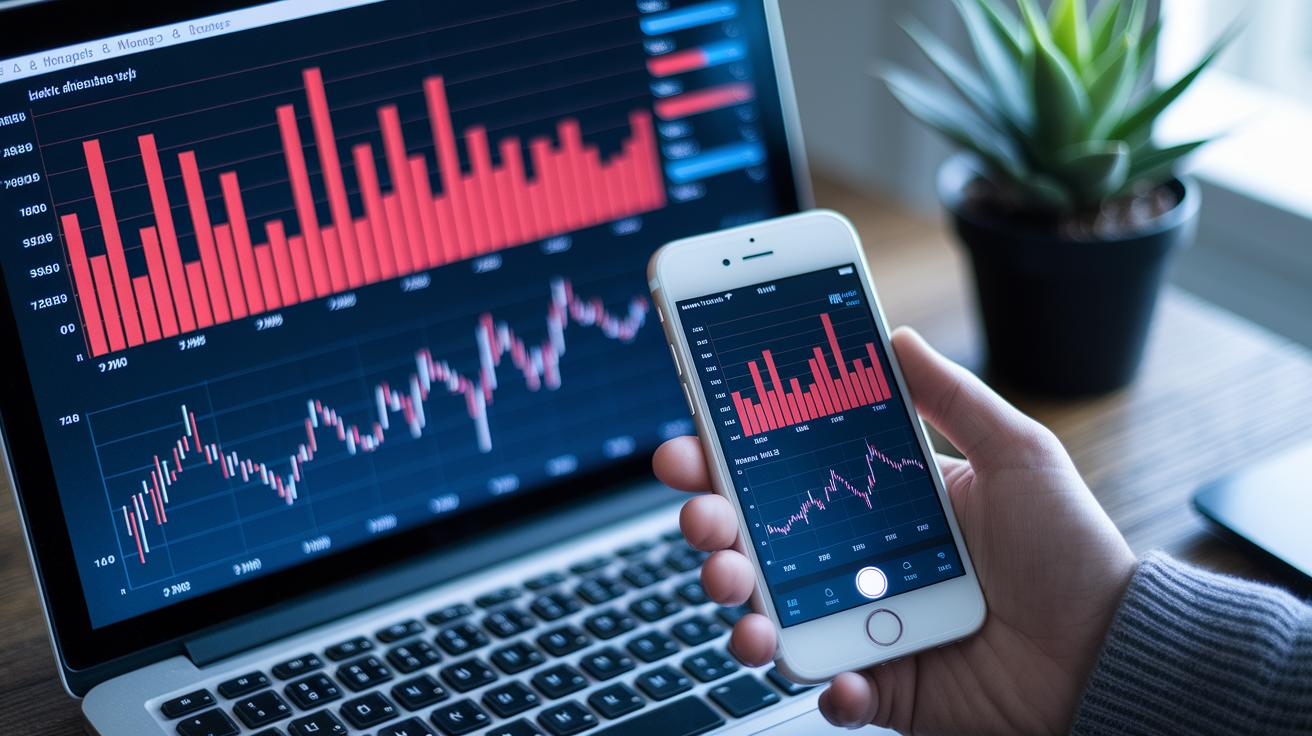
Visual images offer a fast and clear look at how investors feel. For instance, heat maps use color shifts to show the strength of emotions across different sectors. Picture a heat map with one bright red block, it signals strong negative sentiment in that area.
Time-series line charts are another handy tool. They help you track the rise and fall of positive and negative feelings over time. Imagine a line that climbs steadily when optimism is high and dips when caution takes over, it’s almost like watching the market’s pulse in real time.
Dashboard gauges and bar charts put these numbers into a quick, real-time snapshot. They turn raw data into simple visuals that you can check at a glance. And when you add high-frequency overlays, you see tiny market moves as they happen by combining every little sentiment tick with price candlesticks.
Some platforms, like LightningChart Python (a tool that renders data in less than a second), can display millions of data points in a snap. Think about it: in just one minute, you can visualize a flood of market data showing traders’ immediate reactions. This blend of fast, clear graphics with technical details can really boost investor confidence.
- Heat map generation
- Analytical dashboard tools
- High-frequency signal detection
- Technical indicator integration
Challenges and Future Directions in Market Sentiment Trends Analysis

Market sentiment analysis isn’t always straightforward. Sometimes, social media and news outlets give us a skewed picture when certain views are repeated too often. Imagine a few very active accounts all pushing the same opinion, it can lead to a misleading interpretation of the overall mood.
Tools that detect unusual changes work like early warning systems. They pick up on sudden spikes, whether from policy shifts or unexpected announcements. Picture a new policy sparking a wave of negative reactions; these tools alert analysts so they can take a closer look.
Rules like MiFID II also play a big part. They decide how freely data is shared, which in turn affects transparency and how we understand market vibes. This reminds us that the rules set by regulators can really shape market signals.
Keeping our models in check is essential. Regular reviews help make sure our algorithms don’t get too used to past events, so they can handle new, unseen data without tripping up.
- Sampling bias risks
- Anomaly detection for sudden spikes
- Regulatory impact on data openness
- Ongoing algorithm performance checks
- Increased integration complexity with alternative data
And then there’s the growing trend of using alternative data sources like satellite imagery. While they offer fresh insights, they also add layers of complexity, challenging analysts to keep models both accurate and resilient in real time.
Final Words
In the action, our blog walked through how market sentiment trends analysis uses data, emotion scoring, and visualization to shed light on investor mood. We covered everything from core metrics to real-life case studies and the tools that track and verify market shifts. This clear look at the mechanics behind digital asset trends should spark ideas for smarter, more diversified investments. It’s encouraging to see such accessible insight helping shape robust strategies in digital finance.
FAQ
What does stock market sentiment trends analysis mean?
Stock market sentiment trends analysis means using methods like natural language processing and machine learning to measure investor mood from sources such as news, social media, and reports.
How does market sentiment trends analysis work in 2022?
Market sentiment trends analysis in 2022 worked by combining real-time data from news and social media with historical stock information to uncover shifts in investor mood and indicate potential price movements.
What does market sentiment today indicate?
Market sentiment today indicates the current investor mood based on data from trading volumes, news, and online discussions, offering insights into near-term market tendencies.
How do market sentiment indicators function?
Market sentiment indicators use numerical scales from negative to positive values to reflect investor emotions, with metrics like social media scores and news tone providing clues about overall market feelings.
What are some market trends analysis examples?
Market trends analysis examples include studying shifts in trading volumes during earnings and evaluating emoji frequency or tone in social media to predict short-term price movements.
How does the market sentiment indicator on TradingView work?
The TradingView market sentiment indicator overlays investor mood data on price charts, combining sentiment scores with market performance to aid in quick assessment of trading conditions.
Is market sentiment bullish or bearish?
Market sentiment being bullish means investors show optimism toward price increases, while bearish sentiment indicates caution and negative outlook, guiding trader expectations on market direction.
What is the 7% rule in stocks?
The 7% rule in stocks suggests that after positive sentiment or news, a stock might experience a roughly 7% price increase, though results vary and it should be seen as one tool among many.
Can ChatGPT do sentiment analysis?
ChatGPT can process text to interpret tone and mood, but for thorough financial sentiment analysis it usually needs integration with specialized tools and additional data sources to be effective.
