Ever wonder how a little fee can change the game in trading? Crypto funding rates in perpetual futures act like a gentle nudge that keeps long and short positions in balance. In simple terms, traders swap small fees among themselves, which helps guide the timing of trades to keep prices steady.
This smart little mechanism is more than just a fee, it’s a tool that many traders rely on to balance profit and risk. By watching these rates, you can get clues on when to adjust your positions and better manage your overall risk.
How Crypto Funding Rates Function in Perpetual Futures Trading

Perpetual futures give traders a way to bet on asset prices without a ticking clock on when the contract expires. In these contracts, funding rates work like a balancing fee that helps keep the contract price and the actual market price in step, making sure things don't stray too far apart.
Funding rates are swapped between traders with long positions (those expecting prices to rise) and traders with short positions (those betting prices will fall). When the funding rate is positive, folks with long positions pay a fee that chips away at their profits, while those with short positions get a little bonus. It’s like a gentle nudge to keep the market on track. Imagine a trader who timed his move just before an 8-hour funding update and, thanks to a lower fee, ended up with more profit, pretty neat, right?
Every 8 hours, the funding rate gets recalculated based on two key ideas. One is an interest rate benchmark, which is a straightforward measure of the cost to borrow money across exchanges. The other is a premium index that looks at the gap between the perpetual contract and the spot price. When you combine these two, the funding fee adjusts to encourage traders to consider positions opposite to the crowd, nudging everyone to rethink crowded bets.
This smart mechanism helps keep the market steady by giving traders a reason to switch up their positions if too many are on one side. It makes timing around funding updates a clever strategy for managing costs or even making a bit of extra profit. In short, funding rates not only balance out trades but also inspire smart moves that reflect real market sentiment.
Calculation Methodology of Crypto Funding Rates

At its core, the funding rate rests on two main ingredients: an interest-rate benchmark and a premium index. The interest-rate benchmark tells you how much it costs to borrow money across exchanges, while the premium index shows the difference between the price of a perpetual contract and the current spot market value. Every eight hours, these elements come together in a formula that adjusts to the market’s current pulse.
Exchanges use this straightforward formula to set the rate:
Funding Rate = Premium Index + Clamp((Interest Rate – Premium Index), ±0.05%).
In plain terms, if the interest rate is higher than the premium index, the extra fee is capped at 0.05% to keep things balanced. Think of it like cooking: if one spice overpowers your dish, you add just a little bit of something extra to make sure everything blends nicely.
Just as a chef adjusts spices to perfect a dish, traders see funding rates as a way to balance their positions and soften market pressures.
Depending on the mood of the market, rates can swing positive, drop to zero, or even go negative. This regular update helps traders decide when to jump into or step out of a trade, allowing them to cut costs or sometimes even earn fee payments.
crypto funding rates fuel smart trading moves

Funding rates play a big role in shaping smart trading moves. They often tell traders when it’s a good time to act. When these rates drop really low or even go negative, many traders see a chance to make a well-calculated move. One trader, for example, stepped in right before the funding rate reset. It was a lot like catching a perfect wave, turning a small opportunity into a rewarding ride. This approach can cut down on costs or even add a little bonus to your earnings.
Traders often protect their bets by holding spot assets. Think of it as a safety net. When holding long positions (bets that prices will rise), you might face extra costs if funding rates stay high for a while. By keeping a matching spot position, those extra fees can be offset. This simple trick not only protects your profit but also helps keep your risk level balanced.
Choosing the right exchange is another smart move. Some platforms tend to offer lower funding fees over time, which means you can manage your expenses better. Even small savings on fees can add up, especially when you’re moving your money around between different positions.
Traders usually stick to three core ideas when handling these fees:
| Key Tactic | Description |
|---|---|
| Timing Moves | Entering or exiting trades around rate resets, just like catching the perfect wave. |
| Spot Hedging | Holding spot assets as a safety net to balance out extra costs. |
| Exchange Choice | Selecting platforms that typically have lower funding fees. |
Risk management also comes into play. Setting clear exit points and watching the market closely are key steps, especially when sudden funding rate spikes might lead to unexpected losses. In short, blending timing, hedging, and smart exchange choices creates a flexible strategy that fuels smart trading moves even in a market where fees can change quickly.
Comparative Analysis of Crypto Funding Rates on Major Exchanges
When diving into crypto, you quickly notice that funding rates change from one exchange to another. These rates, which are updated every eight hours on platforms like Binance, Bybit, and OKX, show how active the market is and reflect differences in liquidity (or how quickly assets can be converted to cash) and user activity. This regular update helps traders pick the best moment to act, almost like checking the pulse of digital transactions.
Take Binance, for instance. Their BTC contracts typically run between 0.010% and 0.015%, and ETH contracts sit close to 0.015% to 0.020%. Bybit’s numbers are a bit higher, with BTC contracts around 0.012% to 0.017% and ETH contracts between 0.018% and 0.022%. Meanwhile, OKX tends to have a softer swing, with BTC rates from 0.008% to 0.012% and ETH following at 0.014% to 0.018%.
These little differences matter a lot. Traders use them to decide where they might save on fees or get a more cost-effective entry. Even a slight shift in funding rates can change the balance between long and short positions, nudging traders to adjust their strategy right before each update.
| Exchange | BTC 7-day Avg Funding Rate | ETH 7-day Avg Funding Rate | Funding Interval |
|---|---|---|---|
| Binance | 0.010%–0.015% | 0.015%–0.020% | 8 hours |
| Bybit | 0.012%–0.017% | 0.018%–0.022% | 8 hours |
| OKX | 0.008%–0.012% | 0.014%–0.018% | 8 hours |
In short, while every exchange sticks to the same eight-hour refresh, it’s those small differences in average rates that can influence where you trade and how you manage your funding costs. It’s a bit like choosing between different lanes in a race, the right lane can make all the difference in your trading journey.
Historical Crypto Funding Rate Trends and Forecasting

Back in March 2020, during that big market crash, funding rates shot up beyond ±0.05%, which really grabbed everyone's attention. Imagine seeing a sudden jump that felt like an unexpected alarm bell going off. Since then, from 2022 through 2024, these rates have mostly calmed down, usually staying between ±0.01% and ±0.02%. When we look back, Bitcoin's funding hovered around ±0.015%, with a few surprise bursts when market ups and downs got the best of it. Think of a trader watching that usual 0.015% mark, only to see it break away during a bout of market jitters.
Today, traders use several tools to try and guess where rates might be headed over the next one to seven days. They mix old data with what’s happening right now to paint a better picture. Here are three big things they look at:
| Forecasting Input | Description |
|---|---|
| Volatility Metrics | This shows how much prices move around, like using a 30-day look at past swings to see how wiggly the market is. |
| Open Interest Trends | These trends reveal how committed traders are, almost like checking how many hands are on deck. |
| Liquidity Inflows/Outflows | This indicates where money is flowing in or out, helping to spot where the action is happening. |
These tools help traders decide when to jump in or back off. For example, if someone sees a rise in open interest and quick shifts in liquidity, they might think, "Hmm, could this be quiet before a storm?" and tweak their plans. It’s like combining the steady beat of past trends with today’s live updates, giving traders a clearer view of both what was and what might be.
Crypto Funding Rate Arbitrage Opportunities Explained

Crypto funding rate arbitrage is all about spotting mismatches among different trading sites and using them to make a profit. When one exchange shows a negative fee while another shows a positive fee, traders set up trades to earn money from the difference. It’s a bit like finding a sale at one store while another charges full price, you take advantage of both ends.
Success in this game depends on a few main points. Fast execution is very important because funding rates update at 8 a.m., 4 p.m., and 12 a.m. Every second matters when you lock in a better rate. Also, having enough money in your account lets you handle multiple trades at once, while watching several exchanges closely helps you catch these differences before they disappear.
Here is an easy three-step process for funding rate arbitrage:
| Step | Description |
|---|---|
| 1 | Look for different funding rates across trading platforms. |
| 2 | Open opposite trades on each platform before the next funding update. |
| 3 | Earn funding payments regularly, then close your trades. |
By following these steps, traders can take advantage of the changing fee setup to boost their overall trading gains.
Tools for Monitoring Real-Time Crypto Funding Rates
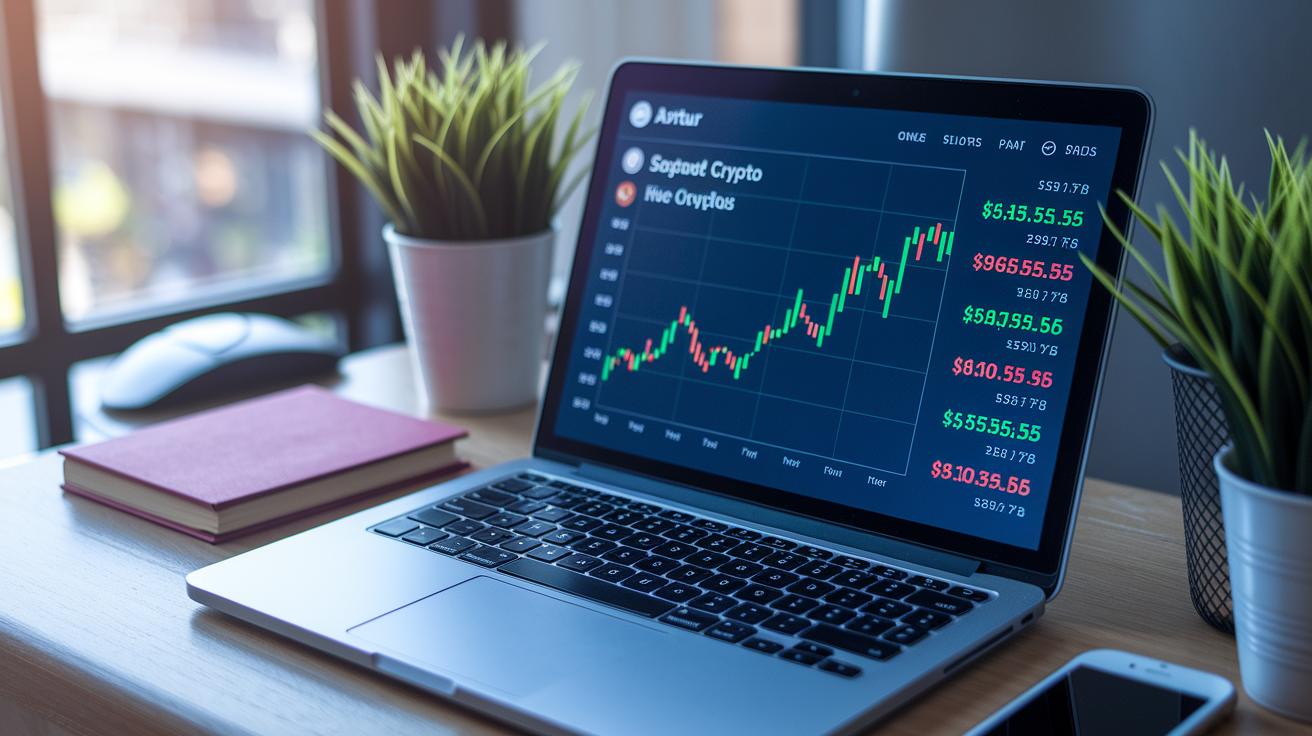
Funding Rate Tracker is one of the key tools that brings real-time crypto funding updates right to your fingertips. It hooks into Ethereum, Polygon, and Base wallets, and once you complete your payment, you get upgraded to Trader status. So when you're checking out your live rate chart, you're not just staying informed, you’re getting a boost with features made for active trading.
The platform makes staying on top of changes a piece of cake. It sends you alerts via email, in-app messages, or even API notifications. Imagine getting an email that says, "Funding rate just dropped to your set limit – time to adjust your trade!" It's like a friendly reminder exactly when you need it.
You can also set your own alert thresholds to match your trading style. With live charts that show the market's heartbeat in real time, you can even take advantage of referral and monetization features if you're looking for more advanced options. In short, this tool streamlines your tracking process and gives you a setup that works just the way you need it.
For example, a custom alert on a sudden spike might prompt you to check your positions right away, ensuring you never miss out on an opportunity.
Final Words
In the action, we explored how funding rates in perpetual futures guide decision making and balance trader positions. We broke down the process of how crypto funding rates work, from interest benchmarks to premium indices. Next, we showed how these rates impact trading tactics, risk management, and arbitrage opportunities. Finally, we highlighted tools that track real-time rate shifts. This clear, friendly look at digital asset funding leaves us feeling optimistic about managing our digital investments. The insights on crypto funding rates can help secure informed, forward-thinking strategies.
FAQ
How can I track crypto funding rates live?
Tracking live crypto funding rates means viewing current fee exchanges between long and short positions in real time. This data, updated every eight hours, helps traders time their entries and exits effectively.
What does a crypto funding rate chart show?
A crypto funding rate chart displays both near-term and historical data on funding fees. This visual insight allows traders to assess fee trends that stabilize perpetual futures prices with spot market values.
How does a crypto funding rates heatmap work?
A crypto funding rates heatmap visually represents fee differences with color coding. It highlights high and low funding levels, helping traders quickly pinpoint market extremes for strategic trading decisions.
What do crypto funding rates represent?
Crypto funding rates represent the fees exchanged between long and short positions to keep perpetual futures prices aligned with spot prices. They adjust based on market demand and can be positive, zero, or negative.
What does funding rate Binance indicate?
The funding rate on Binance refers to the specific fee schedule applied to its perpetual contracts. This rate helps traders gauge cost implications when opening positions and planning their digital asset strategies.
How is the funding rate for BTC calculated in crypto trading?
The BTC funding rate reflects fees exchanged between long and short positions on Bitcoin perpetual contracts. Updated every eight hours, it indicates market sentiment and directly impacts traders’ profit margins.
What does a negative funding rate imply?
A negative funding rate implies that short positions pay fees to long positions. This situation often signals that traders have a bias toward short trading, which can influence strategies in managing overall position costs.
